

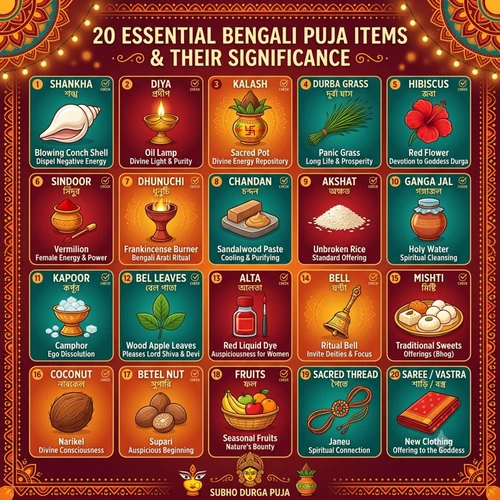
Durga Puja feels incomplete without the traditional items that fill Bengali homes and puja pandals. From fragrant dhuno to glowing diyas, every item adds something special to the worship experience. More importantly, many of these items carry cultural and spiritual meanings passed down through generations.
For Bengalis, preparing for Puja often starts weeks before the celebrations. Families clean their homes, prepare shopping lists and collect essential puja samagri. At the same time, many people living outside Bengal look for traditional Bengali puja items to recreate the familiar festive atmosphere.
So, what goes into a traditional Bengali Puja setup? Let’s explore 20 important Bengali puja items and understand why devotees use them.
1. Dhuno
Dhuno creates the unmistakable fragrance associated with Bengali Puja. Devotees burn it during rituals and aarti to create a sacred atmosphere. The thick smoke and distinctive aroma instantly bring back memories of Durga Puja in Bengal.
2. Dhup
Dhup adds fragrance to the puja space and forms a common part of daily worship. Devotees traditionally use it to create a peaceful and devotional environment.
Moreover, lighting dhup before beginning prayers helps mark the transition from everyday activities to worship.
3. Incense Sticks
Incense sticks offer another simple way to add fragrance during Puja. Families often light them at the beginning of worship and during aarti.
Today, incense comes in many fragrances, but traditional aromas remain popular during Bengali festivals.
4. Puja Bell
The sound of a puja bell creates a familiar rhythm during Bengali rituals. Devotees ring the bell during worship and aarti as they offer prayers to the Goddess.
A traditional bell also adds an authentic touch to a home mandir.
5. Diya
A diya represents light and positivity. Devotees light diyas during Puja to symbolise the victory of light over darkness.
Furthermore, the warm glow of diyas creates a beautiful festive atmosphere inside Bengali homes.
6. Cotton Wicks
Cotton wicks help devotees light traditional diyas and lamps. Families often keep extra wicks ready because Puja involves lighting lamps repeatedly throughout the celebrations.
Therefore, cotton wicks may seem small, but they remain an essential part of any puja shopping list.
7. Camphor
Camphor commonly features during aarti. Devotees light it as part of the final stages of worship. Its bright flame and strong fragrance create a memorable part of the traditional aarti experience.
8. Sindoor
Sindoor holds deep cultural importance in Bengali Durga Puja. During Dashami, many married women participate in Sindoor Khela and apply sindoor to Maa Durga and one another.
As a result, sindoor has become closely connected with the emotional farewell to the Goddess.
9. Flowers
Flowers bring colour, beauty and freshness to the puja space. Devotees offer flowers to Maa Durga as part of their prayers. Depending on local customs and availability, families may choose different flowers for different rituals.
10. Bel Patra
Bel patra, or bael leaves, hold an important place in Hindu worship. Devotees offer them during specific rituals according to tradition. Families usually include fresh leaves in their Puja preparations when their rituals require them.
11. Durba Grass
Durba, a type of sacred grass, appears in several Hindu rituals. Devotees use it as an offering because traditional worship practices associate it with purity and auspiciousness. Its simple appearance also reminds us that Puja does not depend only on elaborate decorations.
12. Turmeric
Turmeric represents purity and auspiciousness in many Indian traditions. Bengali households use turmeric in different rituals and festive preparations. Besides its religious use, turmeric remains an important ingredient in Bengali kitchens, especially during festive cooking.
13. Rice
Rice holds a special place in Bengali culture. Since rice forms the foundation of the Bengali diet, it naturally appears in many rituals and offerings. Devotees use rice in different forms during worship, depending on family customs.
14. Fruits
Fruits make simple and natural offerings during Puja. Families often arrange seasonal fruits on the puja plate and later distribute them as prasad. Therefore, fruits combine devotion with the traditional idea of offering nature’s gifts to the deity.
15. Coconut
Coconut frequently appears in Hindu rituals and offerings. Devotees consider it an auspicious item and use it during different stages of worship. A whole coconut also represents completeness, which makes it a familiar part of many puja arrangements.
16. Betel Leaves and Areca Nut
Betel leaves and areca nut, commonly known as paan and supari, often appear in traditional puja arrangements. Families use them during specific rituals and offerings according to their customs. Together, they add another traditional element to the puja thali.
17. Sandalwood
Sandalwood has a long association with worship and devotional practices. Devotees may use sandalwood paste during rituals or apply it as part of traditional offerings.
Its natural fragrance also adds a calm and pleasant atmosphere to the puja space.
18. Ghee
Ghee plays an important role in traditional Hindu rituals. Families use it for lamps and, where applicable, homa or havan ceremonies. Additionally, pure ghee often appears in festive Bengali cooking, making it useful beyond the puja room.
19. Puja Plate
A puja plate helps organise flowers, rice, offerings and other worship essentials. A traditional plate also makes the entire arrangement look neat and organised. Brass and other traditional metal puja utensils remain popular choices for Bengali households.
20. Bengali Panjika
Finally, a Bengali Panjika can help families keep track of important dates, tithis and traditional observances. For Bengali households, the Panjika represents more than a calendar. It connects everyday life with festivals, rituals and long-standing cultural practices.
Why These Bengali Puja Items Still Matter
Each puja item has its own role, but together they create a complete traditional worship experience. More importantly, these objects connect generations.
Grandparents teach children how to arrange the puja plate. Parents explain why families light diyas and offer flowers. During Durga Puja, these simple practices become treasured memories.
Today, many Bengali families live far from their ancestral homes. However, traditional puja items allow them to maintain familiar customs wherever they live.
Prepare Your Bengali Puja Shopping List
Preparing your Puja shopping list early can make the festive season much easier. First, check the items you already have at home. Next, make a list of everything you need to replace or purchase.
Then, organise your shopping into categories such as puja samagri, groceries, traditional foods and household items.
At Bongo Hridoy, you can explore a range of Bengali products, Puja Samagri, traditional items, Panjika and other favourites for your festive preparations.
Whether you celebrate Durga Puja in Kolkata or far away from Bengal, these traditional items can help you bring the spirit of Bengali Puja into your home.
After all, Durga Puja is not only about grand celebrations. It is also about faith, family, tradition and the little rituals that make the festival unforgettable.
Shubho Durga Puja!