

Introduction to Dal Bori
Bengali cuisine thrives on simplicity and tradition. Among its unique treasures, dal bori holds a very special place. These sun-dried lentil dumplings carry both flavor and memory. Generations have preserved the art of making them. Families still prepare dal bori during winters and festivals.
What Is Dal Bori?
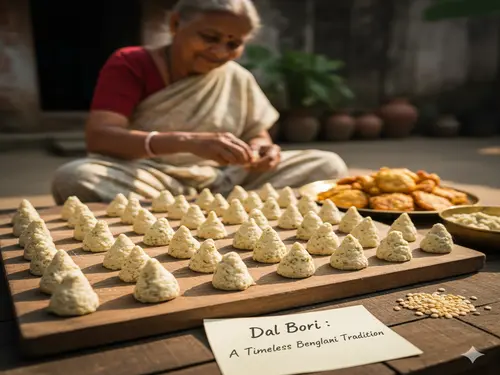
Dal bori refers to small dumplings made from ground lentils. Traditionally, women prepare them by hand and dry them under the sun. Once dried, the dumplings store well for months. These tiny pieces add both texture and flavor to countless dishes.
The Process of Making Dal Bori
The making of dal bori requires patience and skill. First, cooks soak lentils overnight. Then, they grind them into a smooth paste. Next, they season the paste with salt and sometimes spices. After that, they shape small dumplings on a clean cloth. Finally, they sun-dry the pieces until firm. This process ensures long preservation without refrigeration.
Types of Lentils Used
Different households use different lentils. The most common is urad dal, which gives soft and fluffy texture. Some families use moong dal for lighter versions. Masoor dal creates slightly firmer dumplings. Each variation offers a unique flavor and texture in cooking.
Cultural Significance
Dal bori is more than just food. It reflects tradition and seasonal rhythm. In Bengal, making dal bori was once a communal activity. Women of the family gathered in courtyards to prepare them. Children watched with curiosity. The process turned into celebration and bonding.
Dal Bori in Bengali Cuisine
Dal bori appears in many traditional recipes. Some dishes highlight it as the hero, while others use it as garnish. Bori adds crunch, flavor, and aroma to simple curries. It transforms ordinary lentils and vegetables into memorable meals.
Popular Dishes with Dal Bori
- Bori Diye Dal: Lentils cooked with fried bori pieces add crunch and taste.
- Alu Bori Curry: Potatoes pair beautifully with crisp bori in a light gravy.
- Shukto with Bori: Bitter vegetable curry gains balance with fried dal bori.
- Fish Curry with Bori: Some regional recipes include bori with freshwater fish.
These dishes showcase its versatility across Bengali households.
The Art of Frying Bori
Before adding to dishes, cooks usually fry dal bori. Frying enhances aroma and prevents sogginess. Golden brown bori adds nutty flavor and crunch. However, overfrying can make it too hard. Balance is the secret.
Seasonal Preparation
Winter remains the perfect season for making dal bori. The cold, dry air helps in proper sun-drying. Families prepare large batches to last through the year. This seasonal tradition connects food with climate and lifestyle.
Storage and Preservation
Dal bori lasts months when stored properly. Always keep it in airtight containers. Store in dry places away from moisture. Proper storage preserves crispness and prevents spoilage. Some families roast bori lightly before storage to enhance shelf life.
Health Benefits
Since made from lentils, dal bori provides protein and fiber. It aids digestion and offers energy. Fried in moderation, it remains light and healthy. Adding bori to vegetables increases nutritional balance. Thus, it combines taste with wellness.
Regional Variations
Different regions of Bengal prepare bori in different ways. In East Bengal, smaller and spicier boris are common. In West Bengal, bigger, softer ones dominate kitchens. Each variation reflects regional taste and preference.
Dal Bori in Festivals
Festivals and family occasions often feature bori dishes. During Saraswati Puja or Durga Puja, households include dal bori recipes in meals. Guests enjoy the unique crunch and flavor. It adds a festive charm to traditional feasts.
Modern Adaptations
Modern kitchens adapt the tradition with innovation. Some families use ovens or dehydrators for drying. Others shape bori with molds instead of hands. Though methods evolve, the essence of dal bori remains unchanged.
Availability in Markets
Earlier, every household made bori at home. Today, packaged dal bori is widely available. Markets in Kolkata and other cities sell them fresh. Online stores also supply them to Bengalis abroad. This ensures the tradition reaches every corner of the world.
Memories Around Dal Bori
Ask any Bengali about dal bori, and nostalgia follows. They recall mothers shaping bori in winter mornings. They remember the aroma of frying boris. These memories connect generations and preserve culture.
Tips for Perfect Dal Bori Cooking
- Always fry boris before adding them.
- Use small portions to balance flavor.
- Add them just before serving to retain crunch.
- Store carefully for long-lasting freshness.
These tips help recreate authentic taste every time.
Common Mistakes to Avoid
Do not add raw boris directly to curries. They become soggy and tasteless. Avoid storing them in humid places. Overfrying hardens them too much. Proper handling ensures dal bori shines in every dish.
Why Dal Bori Stands Out
Dal bori represents simplicity, patience, and tradition. Few ingredients create such impact. It combines taste, nutrition, and memory in one bite. That is why it remains timeless.
Conclusion
Dal bori continues to hold a cherished place in Bengali cuisine. It carries tradition, nostalgia, and culture on every plate. From winter courtyards to modern kitchens, the journey of bori remains inspiring. Its crunch, flavor, and memory connect past and present beautifully. Whether in dal, curries, or festive feasts, dal bori stands as a true Bengali treasure.