

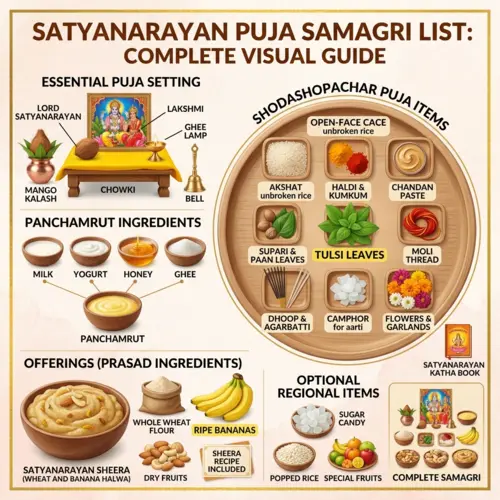
Satyanarayan Puja is a popular Hindu worship ceremony dedicated to Lord Satyanarayan, a form of Lord Vishnu. Families traditionally perform this puja to express gratitude, seek blessings for prosperity and well-being, and mark important occasions such as weddings, housewarmings, birthdays, and other auspicious events.
Preparing the Satyanarayan Puja samagri in advance makes the ceremony easier and more organised. Although the exact requirements can vary according to family traditions, regional customs, and the priest’s instructions, the following list covers the commonly used items for a traditional Satyanarayan Puja at home.
Basic Satyanarayan Puja Samagri
First, arrange the essential items required to create the puja setup:
- Lord Satyanarayan or Lord Vishnu idol or picture
- Lord Ganesha idol or picture
- Puja chowki
- Clean yellow or red cloth
- Kalash
- Coconut
- Mango leaves
- Ganga jal
- Clean water
- Puja thali
- Panchapatra and spoon
- Bell
- Conch shell
- Diya
- Cotton wicks
- Ghee or oil
- Incense sticks
- Camphor
- Matchbox
- Sandalwood paste
- Kumkum
- Turmeric
- Akshat or uncooked rice
- Durba grass
- Fresh flowers
- Flower garlands
Kalash Sthapana Items
The kalash represents auspiciousness and forms an important part of many Hindu puja rituals.
For the kalash, keep:
- 1 copper, brass, or clay kalash
- Clean water
- Ganga jal
- Mango leaves
- 1 coconut
- Red or yellow cloth
- Sacred thread
- Rice
- Flowers
- Turmeric
- Kumkum
- Coins
Place the kalash according to the instructions provided by the priest or the puja paddhati you follow.
Fruits and Offerings
Fresh fruits form an important part of Satyanarayan Puja offerings. You can arrange a variety of seasonal fruits such as:
- Bananas
- Apples
- Oranges
- Guava
- Pomegranate
- Coconut
- Grapes
- Seasonal fruits
Keep the fruits clean and arrange them on a puja plate before the ceremony begins.
Panchamrit Ingredients
Panchamrit is commonly prepared as part of Hindu worship. The traditional ingredients include:
- Milk
- Curd
- Ghee
- Honey
- Sugar
Mix the ingredients according to your family’s tradition or the priest’s instructions.
Satyanarayan Puja Prasad
One of the most important preparations for Satyanarayan Puja is the traditional Satyanarayan prasad, often known as Sinni or Sheera in different regions.
Common ingredients include:
- Semolina or suji
- Sugar
- Milk
- Ghee
- Banana
- Raisins
- Cashews
- Cardamom
Some families use wheat flour instead of semolina, depending on their regional tradition.
The prasad should be prepared fresh and offered to Lord Satyanarayan before distributing it among devotees.
Puja Decoration Items
A clean and beautifully arranged puja area creates an appropriate atmosphere for the ceremony.
Keep the following ready:
- Clean floor covering
- Puja chowki
- Decorative cloth
- Flowers
- Flower garlands
- Mango leaves
- Rangoli or alpana materials
- Diya
- Decorative lamps
You can also decorate the entrance and puja area with traditional designs.
Items for Panchopachar or Shodashopachar Puja
Depending on the form of worship, the priest may use various materials for offering different forms of upachar.
Common items include:
- Sandalwood paste
- Kumkum
- Turmeric
- Flowers
- Akshat
- Incense
- Lamp
- Fruits
- Sweets
- Naivedya
- Water
- Clothes
- Sacred thread
- Betel leaves
- Areca nuts
The exact requirements may differ, so always check the specific puja procedure being followed.
Betel Leaves and Areca Nuts
Betel leaves and areca nuts are commonly used during Hindu puja rituals.
Arrange:
- Fresh betel leaves
- Areca nuts
- Cardamom
- Cloves
- Coins, if traditionally offered
Keep these items on a clean plate so they remain easy to access during the ceremony.
Aarti and Havan Items
If your Satyanarayan Puja includes aarti or havan, additional materials may be required.
For aarti:
- Aarti thali
- Camphor
- Cotton wicks
- Ghee or oil
- Diya
- Flowers
- Bell
For havan, depending on the priest’s instructions:
- Havan kund
- Havan samagri
- Ghee
- Dry wood
- Camphor
- Cotton
- Sesame seeds
- Barley
- Rice
Not every Satyanarayan Puja includes a havan, so confirm this before purchasing the additional materials.
Satyanarayan Puja Katha Book
The Satyanarayan Vrat Katha is an essential part of the traditional ceremony. Keep a Satyanarayan Puja book or printed katha ready.
The priest or family members traditionally read the different chapters of the Satyanarayan Katha during the ceremony. Devotees listen to the story and participate in the prayers.
If you perform the puja in Bengali, Hindi, or another regional language, choose a puja book that matches your family’s preferred tradition.
Complete Shopping Checklist
To make preparation easier, divide your shopping list into categories.
Puja essentials:
Satyanarayan idol or picture, Ganesha idol, chowki, cloth, kalash, coconut, mango leaves, flowers, rice, durba, sandalwood, turmeric, kumkum and sacred thread.
Puja accessories:
Puja thali, bowls, spoon, panchapatra, bell, conch, diya and aarti plate.
Offerings:
Fruits, sweets, betel leaves, areca nuts, coconut, sugar and other naivedya items.
Panchamrit:
Milk, curd, ghee, honey and sugar.
Prasad:
Suji or flour, sugar, milk, banana, ghee, cardamom, dry fruits and raisins.
Lighting:
Diyas, cotton wicks, ghee or oil, incense sticks and camphor.
Katha:
Satyanarayan Vrat Katha or Satyanarayan Puja Paddhati book.
Havan, if required:
Havan kund, wood, ghee, havan samagri, sesame, barley and rice.
How to Prepare for Satyanarayan Puja at Home
First, clean the house and select a peaceful area for the puja. Then clean the puja utensils and arrange the chowki with a fresh cloth.
Next, purchase the fruits, flowers, puja materials, and ingredients for the prasad. Keep everything in separate groups so that you can find each item easily during the ceremony.
Prepare the prasad according to your family’s tradition and keep the Satyanarayan Katha book ready.
Finally, speak with your priest before the puja if you are following a specific regional or family tradition. The priest can provide the exact list and tell you which items require special preparation.
Conclusion
A well-prepared Satyanarayan Puja samagri list helps make the ceremony smooth, organised, and peaceful. From the kalash and flowers to Panchamrit, fruits, prasad ingredients, puja accessories, and the Satyanarayan Katha, each item has a place in the traditional worship.
Because customs differ between families and regions, you should always follow the instructions of your priest or the specific Satyanarayan Puja paddhati you are using.
With thoughtful preparation and sincere devotion, Satyanarayan Puja becomes a meaningful occasion for family members to come together, pray, listen to the sacred Katha, and seek blessings for happiness, peace, and prosperity.