

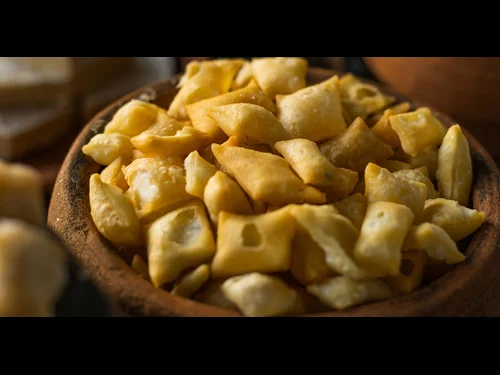
Nimki (নিমকি): The Beloved Bengali Tea-Time Snack
Nimki (নিমকি) is one of the most iconic snacks in Bengali households. Crispy, salty, and mildly spiced, it pairs perfectly with a hot cup of tea. This deep-fried delight carries cultural significance, festive charm, and generations of culinary tradition. From family gatherings to Durga Puja celebrations, Nimki is more than just a snack—it is a symbol of warmth, togetherness, and nostalgia.
The Origins of Nimki
The exact origins of Nimki are not clearly documented, but this snack has been a staple in Bengali kitchens for decades. Families traditionally prepare it at home during festivals, religious occasions, or for tea-time treats. Over the years, it became a popular snack at street stalls, sweet shops, and cafes, reflecting its adaptability and timeless appeal. Nimki represents comfort food, and its preparation often brings families together, passing culinary knowledge from one generation to the next.
Ingredients for Making Nimki
Nimki uses simple ingredients, yet each component contributes to its crispy texture and aromatic flavor.
For the Dough:
1 cup all-purpose flour (maida)
2 tbsp ghee or oil
½ tsp nigella seeds (kalonji)
½ tsp salt
¼ tsp sugar (optional)
Water, as needed
For Frying:
Oil for deep frying
Ghee or oil adds flakiness, kalonji provides a subtle aroma, and water brings the dough together. The ingredients may appear basic, but when combined carefully, they produce a snack loved by all ages.
Preparing the Dough
To make perfect Nimki, start by combining maida, ghee, kalonji, salt, and sugar in a bowl. Rub the ghee into the flour until the mixture becomes crumbly. Gradually add water to form a stiff dough. Knead it until smooth and cover it for 15–20 minutes. Resting the dough ensures that it rolls out easily and produces light, crisp Nimki when fried.
Rolling and Cutting Nimki
Roll the dough into a thin sheet about 1/8 inch thick. Use a knife or cutter to slice it into diamond, square, or rectangular shapes. Prick each piece lightly with a fork to prevent puffing during frying. This step allows the Nimki to maintain its crunch while cooking evenly. Families often customize the shapes, adding a personal touch to the traditional snack.
Frying Nimki to Perfection
Heat oil in a deep pan on medium heat. Fry the Nimki in small batches to prevent overcrowding, ensuring each piece cooks evenly. Watch as the dough turns golden and crisp, releasing its inviting aroma. Remove the Nimki and drain on paper towels to eliminate excess oil. The result is a crunchy, flavorful snack ready to enjoy with tea or as a festive treat.
Tips for Making the Best Nimki
Use ghee instead of oil for a richer flavor.
Fry on medium heat to avoid burning and achieve even crispiness.
Store Nimki in an airtight container to maintain freshness for weeks.
Following these tips helps maintain the perfect texture, taste, and longevity of this beloved snack.
Popular Variations of Nimki
Cooks have creatively adapted Nimki to suit diverse tastes:
Masala Nimki: Add cumin, black pepper, or chili powder for a spicy kick.
Sweet & Salty Nimki: Sprinkle powdered sugar after frying for a subtle sweetness.
Baked Nimki: Bake at 180°C for 15–20 minutes as a healthier alternative without compromising crunch.
These variations demonstrate Nimki’s versatility while preserving its traditional charm.
Cultural Significance of Nimki
Nimki holds more than culinary value—it plays a vital role in Bengali culture. During festivals like Durga Puja and Bijoya Dashami, families prepare Nimki as part of the festive spread. Grandparents often teach younger generations how to knead, roll, and fry the dough, making it a shared family experience. Its presence at tea-time, religious events, and family gatherings symbolizes hospitality, celebration, and togetherness.
Pairing Nimki with Tea and Other Treats
Bengalis traditionally enjoy Nimki with tea (cha), creating a perfect balance of flavors. Pairing it with aam kasundi, the traditional mango mustard sauce, adds tanginess and spice to each bite. During festivals, Nimki often accompanies Bengali sweets like rasgulla, sandesh, and mishti doi, creating a blend of textures and tastes that delights family and guests alike.
Health and Nutritional Benefits
While Nimki is primarily a snack, it offers subtle health benefits when prepared mindfully. Nigella seeds (kalonji) have digestive properties and contribute antioxidants. Ghee provides healthy fats, while moderate frying keeps it light and crisp. Baked or lightly fried Nimki can offer a healthier alternative, allowing families to enjoy this traditional treat without excess oil.
Modern Adaptations and Popularity
Today, Nimki has transcended home kitchens. Cafes, gourmet restaurants, and online food delivery services have introduced artisanal Nimki with innovative flavors. Chefs experiment with fillings, spices, and presentation while honoring traditional recipes. Food bloggers and social media influencers share step-by-step guides, inspiring younger generations to appreciate this timeless snack. Despite modern adaptations, the essence of Nimki remains unchanged—crispy, savory, and deeply satisfying.
Nimki in Everyday Life
Nimki’s appeal goes beyond special occasions. People enjoy it as an afternoon snack, a crunchy accompaniment to meals, or a quick bite on the go. Its portability, simplicity, and long shelf-life make it a favorite for picnics, lunchboxes, and casual tea-time indulgence. Nimki continues to bring comfort, nostalgia, and joy to daily life, connecting people through a shared love for tradition and taste.
Preserving the Tradition
Families continue to pass down Nimki recipes from generation to generation, ensuring its cultural and culinary legacy endures. Teaching children how to knead dough, roll it to perfection, and fry it carefully keeps the tradition alive. Festivals, community gatherings, and family occasions further strengthen this bond, making Nimki a symbol of heritage, family, and shared joy.
Conclusion
Nimki is more than just a crispy, savory snack. It embodies Bengali tradition, festive spirit, and familial love. From its simple ingredients to its meticulous preparation, each step contributes to a snack that delights taste buds and evokes memories. Whether served with tea, paired with sweet or spicy accompaniments, or shared during celebrations, Nimki represents togetherness, comfort, and culinary artistry. Its enduring popularity in homes, markets, and modern kitchens proves that this humble snack has stood the test of time. By preparing and enjoying Nimki, Bengalis honor their heritage while celebrating the joy of simple pleasures.
Nimki remains a timeless snack that continues to bridge generations, festivals, and tea-time rituals, keeping Bengali culture alive one crispy bite at a time.