

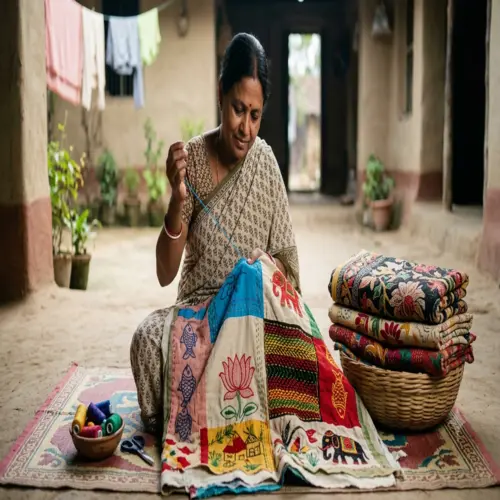
Kantha stitch embroidery represents one of Bengal’s most beautiful and meaningful textile traditions. What may appear to be a simple running stitch actually carries generations of creativity, patience, storytelling, and cultural heritage. From colourful sarees and dupattas to stoles, home décor, and handmade gifts, Kantha embroidery continues to hold a special place in Bengali craftsmanship.
Unlike mass-produced decorative textiles, traditional Kantha work celebrates the human touch. Every stitch reflects the skill of an artisan, while every motif can add a unique character to the fabric. Moreover, the art of Kantha began with an idea that remains highly relevant even today: creating something beautiful from what already exists.
The Humble Origins of Kantha
Kantha embroidery originated in the Bengal region, which includes present-day West Bengal and Bangladesh. Traditionally, women created Kantha by layering old and worn pieces of cloth, often soft cotton sarees or dhotis, and stitching them together with simple running stitches.
Instead of throwing away old fabric, families reused it to create quilts, wraps, covers, and other household items. As a result, Kantha developed as a practical form of recycling long before sustainability became a modern trend.
However, Kantha soon became much more than a method of joining layers of fabric. Women began adding decorative patterns, flowers, animals, birds, village scenes, religious symbols, and geometric designs. Consequently, each piece became a personal expression of creativity and everyday life.
The Beauty of the Simple Running Stitch
The basic Kantha stitch uses a simple running stitch. Yet, skilled artisans can create remarkable textures and patterns using this seemingly simple technique.
Artisans repeatedly move the needle through the fabric, creating small and carefully placed stitches. When they stitch closely together, the fabric develops a rippled or textured surface. Therefore, even a simple design can gain depth and movement.
The beauty of Kantha lies in this simplicity. The artisan does not always depend on heavy embellishments or expensive materials. Instead, the careful placement of thread and the rhythm of the stitches create the visual appeal.
Furthermore, artisans often use contrasting threads to make the motifs stand out. Bright red, yellow, green, blue, and black threads can transform a plain fabric into a vibrant work of art.
Every Motif Tells a Story
One of the most fascinating aspects of Kantha embroidery is its storytelling tradition. Traditional Kantha designs often reflect the world around the artisan.
You may find flowers, trees, fish, elephants, birds, animals, and scenes from village life. In addition, some Kantha pieces include mythological figures, religious symbols, and images inspired by local traditions.
The lotus, for example, often represents beauty and purity. Fish frequently reflect Bengal’s close relationship with rivers and water. Birds may symbolise freedom, while floral patterns bring a sense of nature and celebration.
Therefore, Kantha embroidery does not simply decorate fabric. It can preserve memories, traditions, beliefs, and stories through thread.
The Skill and Patience Behind Kantha Work
Creating detailed Kantha embroidery requires enormous patience. Depending on the size and complexity of the design, an artisan may spend days or even weeks completing a single piece.
First, the artisan prepares the fabric and plans the design. In some cases, the motifs are lightly drawn on the fabric before stitching begins. Then, the artisan carefully works through each section using fine threads and consistent stitches.
However, the real challenge lies in maintaining balance and precision. Uneven stitches can affect the overall appearance of the design. Therefore, experienced artisans develop control through years of practice.
Handmade Kantha also carries natural variations. No two pieces look exactly the same, and this individuality makes handcrafted embroidery especially valuable. Small differences in stitches or motifs often reveal the work of the human hand.
From Traditional Quilts to Modern Fashion
Although Kantha began as a household craft, it has successfully entered the world of modern fashion and lifestyle products.
Today, designers and artisans use Kantha embroidery on sarees, kurtas, dupattas, blouses, jackets, bags, cushion covers, bedspreads, and accessories. As a result, this traditional craft now appeals to both younger and older generations.
A Kantha saree can create an elegant and artistic look for festivals, cultural events, family functions, and special occasions. Similarly, Kantha jackets and stoles can add a distinctive Bengali touch to contemporary outfits.
Moreover, modern designers often combine traditional motifs with new colour combinations and minimalist patterns. This approach allows Kantha to remain relevant without losing its cultural identity.
Why Handmade Kantha Is Different
Machine embroidery can reproduce patterns quickly, but handmade Kantha offers something different. Each handmade piece reflects the individual rhythm and technique of the artisan.
When you look closely at handcrafted Kantha, you can often notice slight variations in the stitches. These variations do not reduce its beauty. Instead, they add authenticity and character. Apart form these, there are many varieties of saris from Bengal which are quite famous like Bengal Handloom Tant Saree & cotton sarees as well.
Additionally, handmade Kantha supports traditional artisans and helps preserve a craft that has survived for generations. When buyers choose authentic handcrafted products, they contribute to the continuation of these skills.
Therefore, purchasing Kantha is not only about owning a beautiful textile. It can also be a way to appreciate the time, labour, and cultural knowledge behind the finished product.
Kantha and Sustainable Craftsmanship
Kantha also has a strong connection with sustainability. Its traditional practice began with the reuse of old fabric, turning materials that might otherwise have been discarded into useful and beautiful household items.
Today, this philosophy feels more important than ever. As consumers become increasingly interested in handmade, sustainable, and slow-fashion products, Kantha offers a meaningful alternative to fast fashion.
Of course, modern Kantha products may use new fabrics as well. Nevertheless, the traditional spirit of making, repairing, reusing, and transforming materials remains an important part of its identity.
How to Choose a Kantha Product
When buying Kantha embroidery, first consider the purpose of the product. A lightweight Kantha saree may suit festive or cultural occasions, while a Kantha stole can work well as an everyday accessory.
Next, examine the stitching carefully. Authentic handmade work usually shows detailed and slightly varied stitches rather than perfectly identical machine patterns.
You should also look at the quality of the fabric and thread. A well-crafted piece should feel comfortable, while the embroidery should remain securely stitched.
Finally, choose a design that reflects your personal style. Some people prefer traditional motifs and bold colours, while others enjoy subtle, modern patterns.
Final Thoughts
The craftsmanship behind Kantha stitch embroidery lies in its ability to transform simplicity into beauty. With nothing more than fabric, thread, a needle, and extraordinary patience, artisans create designs that carry stories across generations.
Kantha represents creativity, sustainability, tradition, and the skilled hands of Bengal’s artisans. From humble beginnings as a method of reusing old cloth, it has grown into a celebrated form of textile art admired around the world.
Whether you choose a Kantha saree, stole, quilt, or home décor item, you are choosing more than an embroidered product. You are bringing home a piece of Bengal’s living heritage—one stitch, one story, and one generation at a time.