

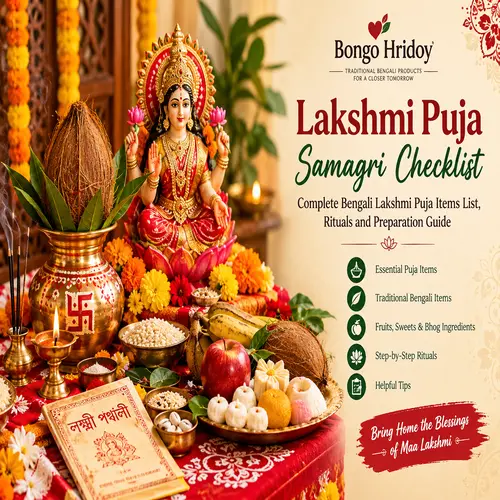
Lakshmi Puja holds a special place in every Bengali household. It is a time when families come together to welcome Maa Lakshmi, the Goddess of wealth, prosperity, happiness, and good fortune. In Bengal, Lakshmi Puja is often celebrated with beautiful alpana designs, traditional offerings, glowing earthen lamps, and heartfelt prayers. Whether you are preparing for Kojagari Lakshmi Puja or performing Lakshmi Puja at home on another auspicious occasion, having the right puja samagri helps you organise the rituals with care. This blog deals in detail with the Bengali Lakshmi Puja samagri list.
However, preparing for a traditional Bengali Lakshmi Puja can sometimes feel overwhelming, especially when you are unsure which items to buy. Therefore, this complete Lakshmi Puja samagri checklist will help you gather the essential ingredients, understand their traditional significance, and prepare for the puja without last-minute confusion.
Complete Bengali Lakshmi Puja Samagri List
Before beginning the puja, arrange all the necessary items in one place. Although certain rituals and materials vary between families and regions, the following checklist covers many commonly used items for a traditional Bengali Lakshmi Puja.
1. Essential Puja Items
First, collect the basic items required to prepare the puja space and perform the worship.
- Maa Lakshmi idol or picture: Place the idol or photograph on a clean, decorated altar.
- Ghot or kalash: A traditional water-filled vessel used in many Bengali puja rituals.
- Dhaan (paddy): An important symbol of agricultural prosperity and abundance in Bengali tradition.
- Durba grass: Commonly used in Hindu worship, according to family customs.
- Fresh flowers: Lotus, marigold, and other seasonal flowers are popular offerings.
- Belpatra or other ritual leaves: Include leaves according to your family’s puja traditions.
- Chandan (sandalwood paste): Used for religious offerings and tilak.
- Sindoor: Included in many traditional Bengali puja arrangements.
- Dhup and dhuno: Used to create a fragrant and devotional atmosphere.
- Agarbatti: Incense sticks offered during worship.
- Diya or প্রদীপ: Earthen or metal lamps used to illuminate the altar.
- Cotton wicks and ghee or oil: Essential for lighting the lamps.
- Puja bell: Used during the worship according to family customs.
Once these items are ready, you can move on to the ingredients used for offerings and traditional Bengali rituals.
2. Bengali Lakshmi Puja Special Items
Bengali Lakshmi Puja includes several traditional materials that reflect the region’s cultural heritage. While their use may differ between households, the following items are commonly associated with Bengali puja preparations.
- Lokhi Panchali: A traditional Bengali devotional text that families read or recite during Lakshmi Puja.
- Dhaan (paddy): Represents abundance and the importance of agriculture in Bengali life.
- Kaudi (cowrie shells): Traditionally associated with prosperity and used in some Bengali puja arrangements.
- Sarer bati or small ritual bowls: Used for arranging specific offerings according to family customs.
- Hand-painted wooden Lakshmi ghot or kalash: A decorative traditional item used in some Bengali households.
- Alpana materials: Rice paste or other suitable materials used to create traditional floor designs.
- Aasan: A clean seat or cloth for the deity or the person performing the puja, as appropriate.
- Puja thali: A plate for arranging flowers, rice, sandalwood paste, and other ritual ingredients.
These traditional items help preserve the distinctive character of Bengali Lakshmi Puja. Moreover, they allow younger family members to learn about the customs passed down through generations.
3. Fruits, Sweets and Bhog Ingredients
Offerings form an important part of Lakshmi Puja. Therefore, prepare fresh fruits, sweets, and other bhog ingredients before the rituals begin.
Common offerings include:
- Seasonal fruits such as bananas, apples, pomegranates, and coconuts.
- Fresh coconut and betel nuts.
- Betel leaves and supari.
- Mishti, such as sandesh, rosogolla, or other locally available sweets.
- Muri (puffed rice), khoi (popped paddy), and batasha, where customary.
- Chire (flattened rice), sweets, and other traditional offerings according to family practice.
- Milk, curd, honey, sugar, or other ingredients if required by your puja tradition.
- Rice and other ingredients for preparing bhog at home.
Importantly, choose fresh ingredients and keep the offerings covered until they are needed. Also, check your family’s traditional requirements in advance because some households follow specific rules about which foods they offer to Maa Lakshmi.
Step-by-Step Bengali Lakshmi Puja Rituals
After collecting the samagri, prepare the worship area and follow your family’s customary puja sequence. Although the exact procedure can vary, these general steps provide a helpful starting point.
Step 1: Clean and Decorate the Puja Space
First, clean the room and the area where you plan to perform the puja. Then, arrange a clean altar and place the Lakshmi idol or picture in a suitable position.
Next, decorate the area with flowers, traditional alpana, and other festive decorations. Many Bengali families create alpana designs near the entrance or around the puja space to welcome Maa Lakshmi.
Step 2: Arrange the Kalash and Puja Samagri
Once the altar is ready, arrange the kalash, flowers, rice, incense, lamps, and other required materials. Place the fruits and sweets on a separate plate so that everything remains organised.
Furthermore, keep the Lokhi Panchali within easy reach if you plan to read it during the puja. This simple preparation makes the ritual more peaceful and helps prevent interruptions.
Step 3: Begin the Puja and Offer Prayers
Next, begin the worship according to your family’s customs. Light the lamps and incense, offer flowers, and pray to Maa Lakshmi for peace, prosperity, and happiness.
During this time, family members may chant prayers or recite traditional devotional verses. If you are following a specific family or community ritual, consult a knowledgeable family member or priest for the correct sequence.
Step 4: Read Lokhi Panchali
Reading or listening to Lokhi Panchali is a cherished tradition in many Bengali homes. Families often gather together to hear the stories and teachings associated with Maa Lakshmi.
In addition to preserving religious traditions, this practice creates an opportunity for children and younger family members to connect with Bengali culture.
Step 5: Offer Bhog and Complete the Puja
Finally, offer the prepared fruits, sweets, and other customary bhog items. Conclude the puja with prayers and an arati if it forms part of your family’s tradition.
After the worship, distribute the prasad among family members and guests according to your customs. Most importantly, maintain a spirit of devotion, gratitude, and togetherness throughout the celebration.
Important Tips for a Peaceful Lakshmi Puja
A little preparation can make the entire occasion easier and more enjoyable. Keep these practical tips in mind:
- Prepare a checklist early: Purchase essential puja items a few days in advance to avoid last-minute shopping.
- Choose fresh offerings: Buy fresh flowers, fruits, and other perishable ingredients close to the puja day.
- Keep everything organised: Arrange the samagri in separate trays so you can find each item quickly.
- Follow family traditions: Bengali Lakshmi Puja customs differ between households, so prioritise your family’s established rituals.
- Prepare the alpana beforehand: If possible, organise the materials and plan the design before the puja begins.
- Keep lamps safe: Place burning diyas away from curtains, paper, and other flammable materials.
Additionally, if you are celebrating Kojagari Lakshmi Puja, confirm the locally observed date and any specific timing requirements before making your final arrangements.
Where to Find Traditional Bengali Lakshmi Puja Samagri
Finding every traditional puja item separately can take time, particularly when you need specialised Bengali materials such as Lokhi Panchali, kaudi, dhaan, or decorative puja accessories.
Therefore, a thoughtfully assembled Lakshmi Puja samagri kit which contains all the Bengali Lakshmi Puja samagri list can make preparation more convenient. Depending on the kit, it may include several commonly required items in one package, helping you save time and organise your shopping more efficiently.
At Bongo Hridoy, you can explore traditional Bengali products and puja essentials that help bring familiar customs into your home. Before purchasing a puja kit, review its item list carefully and compare it with your family’s requirements, as no single kit necessarily contains everything needed for every Bengali household.
Conclusion
Lakshmi Puja is more than a religious celebration; it is a beautiful expression of Bengali heritage, family traditions, and the hope for a prosperous year ahead. From arranging dhaan and kaudi to decorating the altar with alpana and reading Lokhi Panchali, every preparation carries a special place in the hearts of many Bengali families.
With this complete Bengali Lakshmi Puja samagri list, you can organise your essentials, prepare your offerings, and follow your family’s customary rituals with greater confidence. Ultimately, thoughtful preparation allows you to spend less time worrying about missing items and more time enjoying the devotion and togetherness that make Lakshmi Puja so meaningful.
Celebrate tradition with Bongo Hridoy: Explore Bengali puja essentials and traditional products to help prepare your home for a beautiful and memorable Lakshmi Puja.