
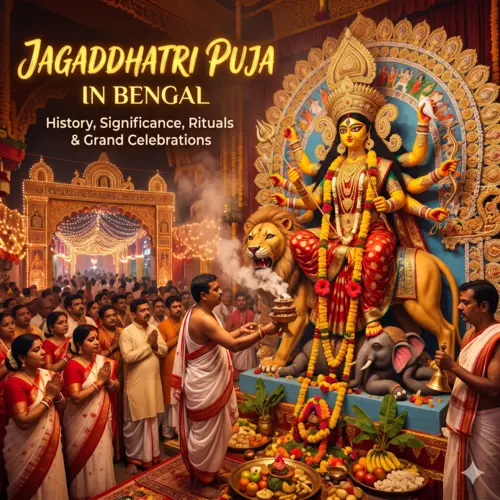
Jagaddhatri Puja is one of the most beautiful and culturally significant festivals celebrated in West Bengal. Dedicated to Goddess Jagaddhatri, a powerful manifestation of Goddess Durga, this festival represents strength, protection, devotion and the victory of good over evil. Every year, thousands of devotees gather to worship the goddess and participate in colourful celebrations across Bengal.
Although Durga Puja and Kali Puja receive widespread attention, Jagaddhatri Puja holds a special place in Bengali culture. The festival is particularly famous in Chandannagar, Krishnanagar and different parts of Hooghly and Nadia districts. Beautiful idols, artistic pandals, traditional rituals and spectacular lighting displays make this celebration truly memorable.
For Bengalis, Jagaddhatri Puja is more than a religious occasion. It is an expression of devotion, heritage, creativity and community spirit.
Who Is Goddess Jagaddhatri?
The name Jagaddhatri comes from two Sanskrit words: Jagat, meaning the world, and Dhatri, meaning the protector or bearer. Therefore, Jagaddhatri represents the divine mother who sustains and protects the entire universe.
According to Hindu beliefs, Goddess Jagaddhatri is another form of Goddess Durga. She symbolises courage, patience, wisdom and the power to overcome negative forces.
The goddess is traditionally depicted with four arms. She carries a conch, bow, arrow and chakra in her hands. She sits on a lion, which is shown standing over an elephant-like demon known as Karindrasura.
Her beautiful appearance represents the victory of divine strength over arrogance, ignorance and evil.
History and Origin of Jagaddhatri Puja in Bengal
Jagaddhatri Puja has a fascinating history in Bengal. According to popular historical accounts, the festival gained prominence during the eighteenth century under the patronage of Maharaja Krishnachandra of Krishnanagar, Nadia.
It is widely believed that Maharaja Krishnachandra introduced or popularised the community celebration of Jagaddhatri Puja in Bengal. Over time, the worship spread to different regions and became an important annual religious celebration.
Chandannagar in Hooghly district also played a significant role in establishing Jagaddhatri Puja as a grand public festival. The tradition became particularly popular among local communities during the eighteenth and nineteenth centuries.
Today, Krishnanagar and Chandannagar remain two of the most famous destinations for experiencing this festival.
Why Is Jagaddhatri Puja Celebrated?
Jagaddhatri Puja celebrates the divine power that protects the universe from evil forces. According to Hindu mythology, the goddess represents the power of righteousness and the importance of controlling one’s ego.
The legend associated with Jagaddhatri teaches an important spiritual lesson. Even powerful beings can become arrogant about their strength. Divine power reminds everyone that no individual is greater than the universal truth.
Therefore, devotees worship Goddess Jagaddhatri for peace, prosperity, protection and spiritual strength.
The festival also provides an opportunity for families and communities to come together, offer prayers and celebrate Bengali traditions.
When Is Jagaddhatri Puja Celebrated?
Jagaddhatri Puja is celebrated during the Shukla Navami of the Bengali month of Kartik, according to the traditional Hindu lunar calendar.
The festival generally takes place after Kali Puja and Diwali. Depending on the lunar calendar, the dates change every year.
In many places, celebrations continue for several days. The main worship takes place on Navami, while Saptami and Ashtami rituals are also observed by different organisers.
Devotees visit pandals, participate in religious ceremonies and seek the blessings of the goddess.
Traditional Rituals and Worship of Goddess Jagaddhatri
Jagaddhatri Puja follows traditional Hindu worship practices. Priests perform various rituals and offer flowers, fruits, sweets and other devotional items to the goddess.
Some of the important rituals include:
1. Bodhan and Pran Pratishtha
The worship begins with traditional preparations and the invocation of the goddess. Through sacred mantras and rituals, devotees welcome the divine presence into the idol.
2. Pushpanjali
Pushpanjali is one of the most important parts of the celebration. Devotees offer flowers while chanting sacred mantras and praying for happiness, prosperity and protection.
3. Bhog Offering
Devotees offer various food preparations to Goddess Jagaddhatri. Fruits, sweets, traditional Bengali dishes and other vegetarian offerings are commonly included.
4. Aarti
During the evening, priests perform aarti using lamps, incense and devotional music. The atmosphere becomes spiritual and peaceful as devotees gather to witness the ceremony.
5. Immersion Ceremony
After the celebrations, the goddess is taken for immersion. In Chandannagar, the immersion procession is particularly famous for its colourful atmosphere, music and community participation.
Chandannagar Jagaddhatri Puja – A Spectacular Celebration
Chandannagar is undoubtedly one of the most famous destinations for Jagaddhatri Puja in Bengal. The town transforms into a magnificent celebration of art, devotion and creativity during the festival.
One of the biggest attractions is the spectacular lighting decoration. Chandannagar has earned a reputation for its innovative decorative lights and illuminated displays.
Local puja committees create beautiful pandals with different themes, artistic installations and elaborate decorations. Visitors from Kolkata and neighbouring districts travel to Chandannagar to experience these celebrations.
The immersion procession is another major attraction. Decorated idols move through the streets accompanied by music, traditional performances and enthusiastic crowds.
The festival reflects the artistic talent and cultural richness of the people of Chandannagar.
Krishnanagar Jagaddhatri Puja – A Celebration of Heritage
Krishnanagar is another important centre of Jagaddhatri Puja celebrations. The town has a special connection with the history of the festival.
The celebrations here reflect traditional Bengali culture, religious devotion and community participation.
Krishnanagar is also famous for its artistic heritage, particularly its clay modelling and pottery traditions. During Jagaddhatri Puja, visitors can experience beautifully crafted idols and traditional decorations.
The combination of religious traditions and local craftsmanship makes Krishnanagar an interesting destination for festival lovers.
Traditional Food and Bengali Festive Delights
No Bengali festival feels complete without delicious food. Jagaddhatri Puja also brings families and communities together through traditional Bengali delicacies.
Puja bhog, khichuri, labra, chutney and payesh are popular festive preparations in many communities.
Bengali sweets also play an important role in the celebrations. Sandesh, rosogolla, chomchom, mihidana and traditional homemade sweets are enjoyed by families and visitors.
Many people also prepare special dishes at home and share food with friends, relatives and neighbours.
These culinary traditions make the festival even more memorable.
The Cultural Importance of Jagaddhatri Puja
Jagaddhatri Puja represents the beautiful relationship between religion and Bengali cultural identity.
The festival brings together people from different communities. Local residents participate in organising pujas, decorating pandals, arranging cultural programmes and welcoming visitors.
It also provides opportunities for artisans, idol makers, decorators, electricians, musicians and small businesses.
Furthermore, the festival helps preserve traditional craftsmanship and religious customs. Younger generations learn about Bengali heritage through these celebrations.
The spirit of togetherness makes Jagaddhatri Puja an important part of Bengal’s cultural calendar.
How to Celebrate Jagaddhatri Puja at Home
Families who wish to celebrate Jagaddhatri Puja at home can follow traditional worship practices according to their family customs.
You can decorate your puja space with flowers, alpana and traditional lamps. Arrange fresh flowers, fruits, sweets, incense sticks and other essential puja samagri.
Offer prayers with devotion and maintain a peaceful atmosphere throughout the ceremony.
Traditional Bengali sweets and homemade vegetarian dishes can also make the occasion special.
Most importantly, celebrate the festival with family members and share its cultural significance with children.
Conclusion: Celebrate the Divine Spirit of Jagaddhatri Puja
Jagaddhatri Puja is a beautiful celebration of divine strength, devotion and Bengali heritage. From the historic traditions of Krishnanagar to the spectacular lighting displays of Chandannagar, the festival showcases the religious and artistic richness of West Bengal.
It reminds us to overcome arrogance, follow the path of righteousness and remain strong in difficult situations.
As families come together, pandals glow with beautiful decorations and devotees offer their prayers, Jagaddhatri Puja continues to preserve the timeless traditions of Bengal.
Celebrate this auspicious occasion with devotion, happiness and the warmth of Bengali culture. May Goddess Jagaddhatri bless everyone with peace, prosperity and strength.