

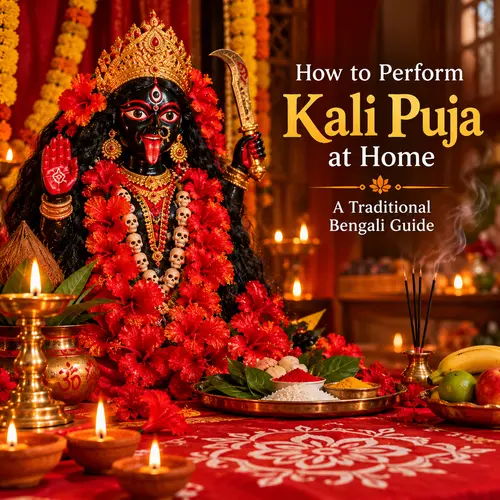
How to Perform Kali Puja at Home: A Traditional Bengali Guide
Kali Puja holds a special place in the hearts of Bengali people. Every year, on the sacred night of Kartik Amavasya, families across Bengal worship Maa Kali with devotion, prayers, flowers, earthen lamps and traditional offerings. From grand community celebrations to small household arrangements, the festival brings families together to seek the blessings of the Divine Mother.
For Bengali households, performing Kali Puja at home is a beautiful way to preserve cultural traditions and pass them on to the next generation. Even if you live outside West Bengal or far away from your ancestral home, you can still celebrate this auspicious occasion by arranging traditional Puja Samagri and following your family customs.
However, preparing for Kali Puja requires attention to several details, including cleaning the worship area, arranging offerings, decorating the altar and following the appropriate rituals.
In this guide, we explain how to perform Kali Puja at home according to common Bengali traditions, what essential items you may need and how to prepare your home for the sacred occasion.
1. Choose a Suitable Place for Kali Puja
The first step is to select a clean and peaceful place in your home for worshipping Maa Kali.
Many Bengali families arrange a dedicated Puja space in their prayer room, living room or courtyard. Clean the area thoroughly and ensure that the surroundings are suitable for performing the rituals.
You can decorate the space with traditional Bengali Alpona, flowers, garlands and decorative lights.
Place a clean wooden platform or Puja Chowki in the designated area. Cover it with a fresh cloth, preferably red, according to your family tradition.
Arrange the idol or photograph of Maa Kali on the platform. Make sure the arrangement is stable and leaves sufficient space for the offerings and Puja utensils.
2. Prepare the Essential Kali Puja Samagri
Arranging all the required Puja Samagri before the evening helps make the worship more organised.
Different families follow different traditions, and the exact requirements may depend on the form of worship and the guidance of the priest.
Here is a general checklist of items commonly used during household Kali Puja.
Kali Puja Samagri Checklist
For worship and decoration:
- Maa Kali idol or photograph
- Red hibiscus flowers (Joba Phool)
- Flower garlands
- Belpatra, where prescribed
- Fresh fruits
- Coconut
- Betel leaves and betel nuts
- Rice grains and Dhaan
- Sindoor
- Haldi and Kumkum
- Chandan
- Ganga Jal
For lighting and devotional offerings:
- Earthen lamps (Pradeep)
- Cotton wicks
- Ghee or mustard oil
- Incense sticks (Agarbatti)
- Dhupbatti
- Dhuna
- Matchbox
- Camphor, where used
For Puja arrangements:
- Puja plates and bowls
- Water containers
- Flowers and offering baskets
- Clean cloth
- Fruits and sweets
- Ingredients for traditional Bhog
Keep the items organised in separate trays so that they are easy to access during the worship.
3. Clean and Decorate the Puja Area
Traditional Bengali households pay special attention to cleanliness before Kali Puja.
After cleaning the worship area, decorate the entrance and altar with flowers, lights and Alpona.
Alpona is an important part of Bengali festive culture. Traditionally prepared using rice paste, these beautiful white patterns add an authentic Bengali touch to the celebration.
You can create simple floral patterns, circular designs and traditional motifs around the Puja Chowki.
Place earthen lamps around the altar and at suitable locations in your home. Their gentle light creates a peaceful and devotional atmosphere.
4. Arrange the Idol or Photograph of Maa Kali
Once the decorations are complete, arrange the idol or photograph of Maa Kali on the prepared platform.
The traditional form of Maa Kali is often depicted with a dark complexion, a garland of heads, a protruding tongue and four arms. Her appearance represents the destruction of evil and the protection of her devotees.
Decorate the idol according to your family customs with fresh flowers and garlands.
Red hibiscus, popularly known as Joba Phool, is particularly associated with the worship of Maa Kali.
Arrange the flowers, fruits, incense and other offerings neatly around the idol.
5. Begin the Puja with Devotion
Kali Puja is traditionally performed at night, especially during Nishita Kaal, the midnight period.
Before beginning the worship, family members should take a bath, wear clean clothes and prepare themselves for the rituals.
Many households begin by offering prayers to Lord Ganesha and remembering their family deities according to their traditions.
A priest or knowledgeable family member may then perform the prescribed preliminary rituals, including Sankalpa and other customary procedures.
The principal worship of Maa Kali follows the rituals prescribed by the family’s tradition or the relevant Puja paddhati.
It is important to remember that Kali Puja can involve specific Tantric procedures. Household devotees should not attempt unfamiliar or specialised rituals without proper guidance.
6. Offer Flowers and Prayers to Maa Kali
Flowers are among the most important offerings during Kali Puja.
Red hibiscus is traditionally regarded as especially auspicious for worshipping Maa Kali.
Offer fresh flowers and garlands while praying for the well-being of your family.
Devotees also offer prayers seeking courage, protection, peace, prosperity and freedom from negative influences.
You can chant familiar prayers or hymns dedicated to Maa Kali according to your family’s practice.
For many Bengali families, this is the most emotional part of the celebration, as they express their devotion to Maa as their Divine Mother.
7. Light Earthen Lamps, Dhup and Agarbatti
Lighting lamps and incense creates a traditional atmosphere during household Kali Puja.
Arrange earthen lamps around the altar and light them using ghee or oil according to your custom.
Light incense sticks and traditional Dhupbatti to accompany the worship.
Many Bengali households also use Dhuna as part of their traditional devotional practices.
The combination of earthen lamps, flowers and incense gives the Puja area a distinctly Bengali festive appearance.
Always keep burning lamps and incense away from curtains, paper decorations and other flammable materials. Never leave them unattended.
8. Prepare Bhog and Offer Prasad
Food offerings are an important part of Bengali religious traditions.
During Kali Puja, families prepare different varieties of Bhog depending on their customs and the instructions followed by their priest.
Common offerings may include:
- Seasonal fruits
- Coconut and sweets
- Luchi
- Khichuri
- Payesh
- Other traditional vegetarian preparations
Some temples and families follow specific food-offering traditions that differ from ordinary household Bhog.
Prepare the offerings with cleanliness and devotion. Present them according to the prescribed rituals and distribute Prasad after the worship.
9. Perform the Evening and Midnight Rituals
Unlike many other Hindu festivals, the principal worship of Maa Kali traditionally takes place during the night.
Nishita Kaal is considered an important period for Kali Puja. Therefore, many Bengali families arrange their worship around the midnight muhurat.
The priest performs the prescribed rituals, offerings and prayers according to the applicable Puja paddhati.
The exact sequence and duration can vary considerably. Families performing a traditional full Kali Puja should consult a knowledgeable priest and follow their preferred Bengali Panjika.
Those conducting a simple household prayer can offer flowers, light lamps and pray with devotion without attempting specialised Tantric procedures.
10. Complete the Puja and Seek Maa Kali’s Blessings
After completing the prescribed rituals, devotees offer their final prayers to Maa Kali.
Many families perform Aarti using a traditional lamp while singing devotional songs or reciting prayers.
The worship concludes according to the family’s customary procedures.
Distribute Prasad among family members and guests. Some households also organise a small gathering where relatives and neighbours come together to celebrate the occasion.
For Bengali families, Kali Puja is not only about religious observance. It is also about togetherness, devotion and preserving the traditions that connect generations.
Bhut Chaturdashi: An Important Bengali Tradition Before Kali Puja
No traditional Bengali Kali Puja celebration is complete without mentioning Bhut Chaturdashi.
Observed on the day before Kali Puja, Bhut Chaturdashi is associated with two distinctive Bengali customs.
Choddo Prodeep – Lighting Fourteen Lamps
Bengali families traditionally light fourteen earthen lamps around their homes. This custom is popularly known as Choddo Prodeep.
The lamps are associated with remembering ancestors and protecting the household according to popular Bengali beliefs.
Choddo Shaak – Fourteen Varieties of Greens
Another important tradition is preparing Choddo Shaak, a dish made using fourteen varieties of leafy greens.
These customs make Bhut Chaturdashi an important part of Bengal’s festive calendar.
Tips for Performing Kali Puja at Home
If you are planning to celebrate Kali Puja at home, a little preparation can make the occasion more convenient.
- Purchase the required Puja Samagri a few days before the festival.
- Consult your preferred Bengali Panjika for the appropriate Puja timings.
- Arrange fresh flowers and fruits on the day of worship.
- Clean and decorate the altar in advance.
- Keep the incense, lamps and other offerings organised.
- Follow your family traditions and seek guidance from a knowledgeable priest.
- Keep children away from burning lamps, incense and other hot Puja materials.
- Avoid attempting specialised Tantric rituals without appropriate instruction.
Most importantly, celebrate the occasion with devotion, respect and a peaceful mind.
Celebrate Traditional Bengali Kali Puja with Bongo Hridoy
Bengali festivals are deeply connected with our culture, traditions and everyday lifestyle. Whether it is Kali Puja, Kartik Puja, Lakshmi Puja or Saraswati Puja, every occasion brings families closer to their roots.
At Bongo Hridoy, we understand the importance of preserving these traditions.
Our online store brings together a wide range of traditional Bengali products, including Puja Samagri, Dhuna, Agarbatti, Dhoopbatti, religious books, Bengali groceries, sweets, handicrafts and other essentials.
For Bengalis living outside Bengal, finding traditional products can sometimes be difficult. Bongo Hridoy makes it easier to bring the essence of Bengal to your doorstep with shipping options across India and worldwide.
Prepare for Kali Puja with the traditional essentials your family needs.
Explore our collection at www.bongohridoy.com.
Bongo Hridoy – From the Heart of Bengal.
বাংলা থাকবে হৃদয়ে।
Frequently Asked Questions About Kali Puja at Home
1. Can Kali Puja be performed at home?
Yes. Many Bengali families perform Kali Puja at home by following their family traditions and prescribed rituals. A priest’s guidance is recommended for a complete traditional Puja.
2. What are the essential items required for Kali Puja?
Common items include a Maa Kali idol or photograph, red hibiscus flowers, incense sticks, Dhupbatti, Dhuna, earthen lamps, cotton wicks, fruits, sweets, coconut, betel leaves, betel nuts, sindoor and other Puja Samagri.
3. Which flower is offered to Maa Kali?
Red hibiscus, known as Joba Phool in Bengali, is one of the most popular flowers offered to Maa Kali.
4. At what time should Kali Puja be performed?
Kali Puja is traditionally performed at night, particularly during Nishita Kaal. The exact auspicious timing depends on the Amavasya Tithi and local Panjika calculations.
5. What colour clothes should be worn during Kali Puja?
There is no universal compulsory dress colour for devotees. Many Bengali households prefer clean traditional clothing, with red being a popular colour associated with the goddess.
6. What food is offered to Maa Kali?
Traditional offerings may include fruits, sweets, coconut, khichuri, luchi and other preparations according to family customs and the form of worship.
7. What is Choddo Prodeep?
Choddo Prodeep is a Bengali tradition of lighting fourteen earthen lamps on Bhut Chaturdashi, the day before Kali Puja.
8. Can Bengalis living outside West Bengal perform Kali Puja at home?
Absolutely. Bengali families living in different parts of India and abroad can celebrate Kali Puja by arranging traditional Puja essentials, decorating their homes and following their family customs.
9. Where can I buy traditional Bengali Puja Samagri online?
You can explore traditional Bengali Puja essentials, Dhuna, Agarbatti, Dhoopbatti, religious books and other cultural products at BongoHridoy.com, which offers shipping across India and worldwide.
10. Is a priest necessary for Kali Puja at home?
A priest is recommended for performing the complete traditional Kali Puja, especially when it involves specialised rituals. Families conducting simple devotional prayers can follow their customary practices and seek guidance when needed.