
Introduction
Janmashtami, the sacred festival celebrating the birth of Lord Krishna, holds a special place in the hearts of millions of devotees across India. While the festival is celebrated with great enthusiasm throughout the country, Bengal adds its own unique cultural charm to this auspicious occasion. From beautifully decorated temples and devotional songs to delicious homemade sweets and family gatherings, Janmashtami in Bengal is a wonderful blend of spirituality, tradition, and community.
More importantly, this festival reminds us that goodness always triumphs over evil. Lord Krishna’s teachings continue to inspire people to live with honesty, compassion, courage, and wisdom. As families gather to celebrate, Janmashtami also strengthens relationships and keeps centuries-old Bengali traditions alive.
The Significance of Janmashtami
Janmashtami marks the birth of Lord Krishna, the eighth incarnation of Lord Vishnu. According to Hindu scriptures, Krishna was born at midnight in Mathura to Devaki and Vasudeva during a time when the cruel King Kansa ruled with fear and oppression.
Soon after Krishna’s birth, Vasudeva carried the divine child across the Yamuna River to Gokul, where he was raised by Nanda Maharaj and Yashoda. This miraculous journey symbolises hope, faith, and divine protection. Therefore, Janmashtami is not merely a birthday celebration—it represents the victory of righteousness over injustice.
Furthermore, Lord Krishna’s teachings in the Bhagavad Gita continue to guide people in overcoming life’s challenges with patience, duty, and devotion.
Why Janmashtami is Special in Bengal
Although Janmashtami is celebrated nationwide, Bengal has a deep emotional and spiritual connection with Lord Krishna. The influence of the Bhakti movement, especially through Sri Chaitanya Mahaprabhu, transformed Bengal into one of the most important centres of Krishna devotion.
As a result, Krishna bhakti became deeply rooted in Bengali culture. Even today, devotional music, kirtans, and readings from sacred scriptures fill homes and temples during this festival.
Many families observe fasting throughout the day and break their fast only after the midnight birth celebration of Lord Krishna. In addition, devotees spend the day chanting Krishna’s name and listening to stories from the Bhagavata Purana.
Janmashtami Celebrations Across Bengal
Across Kolkata, Nadia, Mayapur, and many other parts of West Bengal, Janmashtami is celebrated with immense devotion.
Temples are decorated with colourful flowers, traditional alpana designs, mango leaves, and glowing lamps. Devotees gather to offer prayers, sing bhajans, and participate in special evening aartis.
Meanwhile, children often dress as little Krishna and Radha, bringing smiles to everyone around them. Their colourful costumes, peacock feathers, and flute accessories create a joyful festive atmosphere.
In many neighbourhoods, cultural programmes featuring devotional songs, dance dramas, and Krishna Leela performances are organised to narrate stories from Krishna’s childhood.
The Spiritual Importance of Mayapur
No discussion about Janmashtami in Bengal is complete without mentioning Mayapur.
Located in Nadia district, Mayapur is recognised as the global headquarters of the International Society for Krishna Consciousness (ISKCON). Every year, thousands of devotees from India and around the world visit Mayapur to witness its magnificent Janmashtami celebrations.
The temple remains beautifully illuminated, while continuous kirtans, Bhagavad Gita discourses, and elaborate midnight celebrations create an unforgettable spiritual experience.
For many devotees, visiting Mayapur during Janmashtami is a lifelong dream because it offers a unique opportunity to experience pure devotion in its grandest form.
Bengali Homes Come Alive During Janmashtami
The beauty of Janmashtami lies not only in temples but also inside Bengali homes.
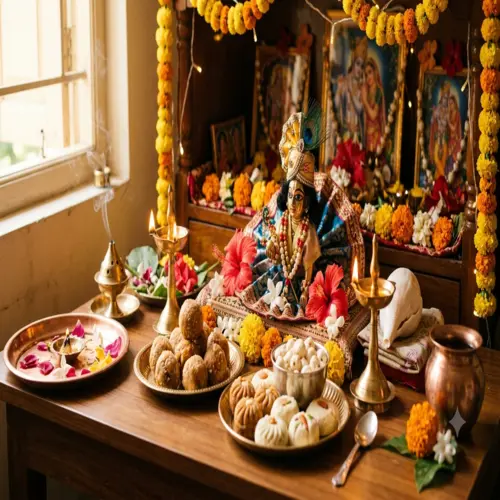
Families clean and decorate their houses several days before the festival. Small swings are prepared for baby Krishna, while beautiful idols are adorned with new clothes, jewellery, flowers, and fragrant sandalwood paste.
Women prepare traditional offerings with great care, and children eagerly wait to participate in evening prayers.
At midnight, the family gathers before the altar to perform aarti, sing devotional songs, and celebrate Krishna’s divine birth. The atmosphere becomes peaceful, emotional, and spiritually uplifting.
Traditional Bengali Foods Prepared on Janmashtami
Food plays an important role in every Bengali festival, and Janmashtami is no exception.
Since many devotees observe vegetarian fasting, the offerings are prepared without onion and garlic. Fresh fruits, milk, yoghurt, butter, honey, and homemade sweets are considered especially auspicious because Lord Krishna loved dairy products.
Some popular Bengali Janmashtami offerings include:
- Payesh (Bengali rice pudding)
- Mishti Doi
- Sandesh
- Rasgulla
- Naru made with coconut and jaggery
- Chhana-based sweets
- Fresh butter and makhan
- Seasonal fruits
- Panchamrit
- Khichuri with mixed vegetables for the following day’s feast
After offering these dishes to Lord Krishna, the food becomes Prasad, which is lovingly shared among family members, neighbours, and visitors.
Devotional Music and Kirtan
Music has always been an inseparable part of Bengali spirituality.
During Janmashtami, melodious bhajans and kirtans dedicated to Lord Krishna fill homes and temples. The rhythmic sounds of the mridanga, kartal, and conch shells create an atmosphere of divine joy.
Moreover, many devotees spend hours singing the Hare Krishna Mahamantra together, believing that collective chanting brings inner peace and spiritual happiness.
Even people who may not regularly visit temples often join these devotional gatherings because the music creates a powerful sense of unity and devotion.
The Timeless Teachings of Lord Krishna
Janmashtami is much more than rituals and celebrations. It is also an opportunity to reflect on Lord Krishna’s timeless teachings.
The Bhagavad Gita encourages people to perform their duties sincerely without becoming attached to the results. Krishna teaches compassion, self-discipline, courage, forgiveness, and faith.
These lessons remain just as relevant today as they were thousands of years ago. Whether someone is a student, professional, entrepreneur, or homemaker, Krishna’s wisdom offers guidance for facing modern life’s challenges with confidence and clarity.
Therefore, Janmashtami inspires people not only to worship but also to become better human beings.
Preserving Bengali Heritage Through Festivals
Festivals like Janmashtami play an important role in preserving Bengal’s rich cultural heritage.
Children learn traditional customs by watching their grandparents prepare offerings, decorate home temples, and narrate stories from Krishna’s childhood. In this way, ancient traditions continue to pass from one generation to the next.
Furthermore, local artisans, sweet makers, florists, musicians, and temple communities all contribute to keeping these cultural practices alive.
As modern lifestyles become increasingly busy, celebrating Janmashtami together reminds families of the importance of faith, gratitude, and togetherness.
Conclusion
Janmashtami beautifully reflects the spiritual heart of Bengali culture. It is a festival where devotion meets tradition, music blends with prayer, and families come together to celebrate the birth of Lord Krishna with love and gratitude.
Whether experienced in the magnificent temples of Mayapur, the bustling streets of Kolkata, or the warmth of a small Bengali home, Janmashtami continues to inspire millions every year.
Ultimately, the festival reminds us that kindness, truth, humility, and unwavering faith are timeless values. By celebrating Janmashtami and preserving Bengali traditions, we honour not only Lord Krishna’s divine legacy but also the rich cultural heritage that continues to unite generations with joy, devotion, and hope.