

Nag Panchami in Bengali Culture: Traditions, Beliefs, Rituals and Spiritual Significance
Nag Panchami holds a special place in Hindu tradition and carries a unique cultural significance in Bengal. Celebrated in the month of Shravan, this sacred festival honours snakes, especially the divine serpent forms associated with Lord Shiva, Lord Vishnu, and other deities. In Bengali households, devotees observe Nag Panchami with prayers, offerings, folk traditions, and deep respect for nature.
Although different regions celebrate Nag Panchami in different ways, Bengali culture gives the festival its own distinctive character. The celebration connects spirituality, mythology, family traditions, and Bengal’s close relationship with nature. Moreover, the festival reminds people to respect all forms of life and maintain harmony with the natural world.
What Is Nag Panchami?
Nag Panchami is a Hindu festival dedicated to the worship of Nagas, or divine serpents. Devotees traditionally observe the festival on the Panchami Tithi, or fifth lunar day, during the Shukla Paksha of the month of Shravan.
According to Hindu beliefs, Nagas possess divine powers and protect the earth, water sources, and devotees. Therefore, worshipping them represents more than religious devotion. It also expresses gratitude toward nature and the forces that sustain life.
In Bengal, the festival often takes place during the monsoon season. At this time, heavy rainfall can drive snakes and other creatures from their underground habitats. Consequently, traditional beliefs surrounding Nag Panchami also reflect the close connection between rural communities and their natural surroundings.
Nag Panchami and Bengali Culture
Bengali culture has always maintained a strong connection with folk beliefs, village traditions, nature worship, and Hindu spirituality. Nag Panchami fits naturally into this cultural landscape.
In many parts of Bengal, people traditionally associate snake worship with protection, fertility, rainfall, and agricultural prosperity. Farmers especially respected snakes because they help control rodents that can damage crops. As a result, the snake became both a natural presence in rural Bengal and a sacred symbol in religious traditions.
Furthermore, Bengali folklore contains numerous stories involving snakes and serpent deities. These stories have travelled through generations through oral traditions, folk performances, literature, and religious texts.
Manasa Devi and Snake Worship in Bengal
The story of Goddess Manasa represents one of the strongest connections between snake worship and Bengali culture. Manasa Devi is widely revered as the goddess associated with snakes, protection, fertility, and prosperity.
The worship of Manasa became particularly influential in Bengal’s folk and rural traditions. Many Bengali families and communities observe Manasa Puja during the monsoon months.
The famous Bengali literary tradition of Manasamangal also helped preserve stories about Goddess Manasa. These narratives describe her divine powers, her relationship with other deities, and her efforts to gain recognition among humans.
Therefore, when discussing Nag Panchami in Bengal, it is important to understand the wider cultural importance of Manasa Devi. Snake worship in Bengal does not exist only as an isolated ritual. Instead, it forms part of a much larger tradition of folk religion and storytelling.
How Bengalis Observe Nag Panchami
Nag Panchami rituals vary from one family and region to another. However, devotees generally begin the day by cleaning the worship area and preparing a simple puja arrangement.
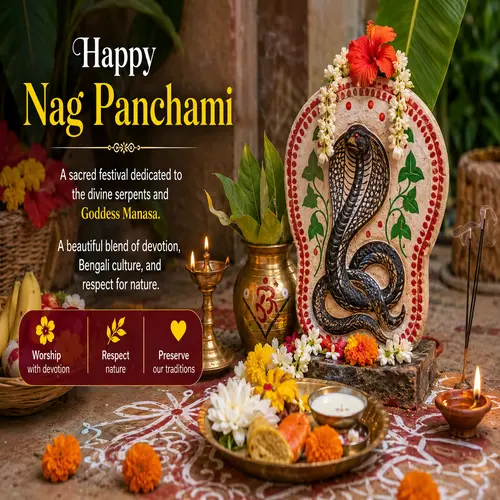
Some families worship images, paintings, or symbolic representations of snakes. Others offer prayers to Goddess Manasa. Devotees may offer flowers, fruits, milk, sweets, and other traditional items according to their family customs.
In rural areas, people have historically performed rituals near anthills, ponds, agricultural fields, or other places associated with snakes. However, modern devotees increasingly choose safe symbolic forms of worship rather than approaching or handling live snakes.
During the puja, devotees pray for the safety and wellbeing of their families. They also seek protection from snakebites, natural dangers, and misfortune.
The Spiritual Meaning of Snake Worship
At first glance, snake worship may appear unusual to people unfamiliar with Hindu traditions. However, the symbolism carries deep spiritual meaning.
The snake represents transformation, power, protection, and the mysteries of nature. Hindu traditions also associate serpents with divine energy and cosmic balance.
Lord Shiva wears a serpent around his neck, while Lord Vishnu rests upon the cosmic serpent Shesha. These associations give the serpent an important position within Hindu mythology.
Consequently, Nag Panchami encourages devotees to look beyond fear and recognize the sacred presence of nature. The festival teaches that humans should coexist respectfully with other living beings.
Nag Panchami During the Bengali Monsoon
The timing of Nag Panchami also makes the festival particularly relevant to Bengal. The month of Shravan arrives during the monsoon, when Bengal experiences frequent rainfall, flooded fields, wet soil, and overflowing ponds.
During this period, snakes naturally become more visible because rain can disturb their underground shelters. Historically, rural communities therefore developed strong awareness of snakes and their behaviour.
Nag Panchami provides a cultural framework for expressing respect toward these creatures. At the same time, the festival reminds people to avoid unnecessary harm to wildlife.
Today, people can preserve this tradition while also supporting responsible wildlife practices. Devotees should never capture, handle, feed, or harm wild snakes for religious purposes.
Traditional Bengali Foods and Offerings
Food plays an important role in Bengali religious celebrations, and Nag Panchami is no exception. Families may prepare simple vegetarian offerings for the puja depending on local and household customs.
Fruits, sweets, milk-based preparations, rice dishes, and seasonal foods can become part of devotional offerings. In Bengal, devotees often prepare food with care and offer it first to the deity before sharing it with family members.
However, traditions differ significantly between communities. Therefore, families generally follow the customs passed down through their elders.
The preparation and sharing of food also bring families together. In this way, Nag Panchami becomes not only a religious observance but also an opportunity to preserve family traditions.
Folk Traditions and Bengali Storytelling
Bengal’s cultural identity strongly revolves around storytelling. For generations, grandparents, parents, folk artists, and village performers have shared stories about Manasa Devi and the Nagas.
These stories often contain lessons about devotion, pride, perseverance, justice, and divine power. As a result, religious narratives become a way of teaching values to younger generations.
The Manasamangal tradition remains especially important in understanding how snake worship became embedded in Bengali literature and folk culture.
Even today, these stories continue to influence Bengali religious practices, cultural performances, books, and household traditions.
Nag Panchami and Respect for Nature
One of the most meaningful lessons of Nag Panchami is the importance of respecting nature.
Bengal’s rivers, ponds, wetlands, forests, and agricultural landscapes support countless forms of wildlife. Snakes play an important ecological role, particularly by controlling rodent populations.
Therefore, protecting snakes also contributes to maintaining ecological balance. Nag Panchami provides an opportunity to connect traditional beliefs with modern environmental awareness.
Instead of celebrating through the exploitation of wildlife, communities can honour the spirit of the festival through symbolic worship, prayers, education, and conservation.
How to Celebrate Nag Panchami Responsibly
Modern celebrations can preserve tradition while protecting wildlife. Devotees can create a small puja space at home, offer flowers and fruits, recite prayers, and worship symbolic images of Nagas or Goddess Manasa.
Furthermore, families can teach children about the cultural and ecological importance of snakes. They can explain that snakes generally avoid humans and should not become targets of unnecessary fear or violence.
If someone encounters a snake, the safest approach is to maintain distance and contact trained local wildlife rescuers rather than attempting to capture or kill it.
Conclusion
Nag Panchami represents much more than the worship of snakes. In Bengali culture, the festival brings together mythology, folk traditions, family customs, agriculture, spirituality, literature, and respect for nature.
From the stories of Goddess Manasa to the traditions of rural Bengal, snake worship has remained an important part of the region’s cultural heritage. Moreover, the festival offers a valuable lesson for modern society: humans share the natural world with countless other creatures, and respecting that connection benefits everyone.
As Bengal continues to modernize, families can preserve the spirit of Nag Panchami by celebrating its traditions thoughtfully and responsibly. Through prayers, storytelling, traditional food, cultural practices, and environmental awareness, the festival can continue to connect generations with Bengal’s rich spiritual and cultural heritage.