
Janmashtami and Bengali Culture: Celebrating the Birth of Lord Krishna
Janmashtami, the sacred festival celebrating the birth of Lord Krishna, holds a special place in Bengali culture. Devotees across Bengal observe this auspicious occasion with prayers, devotional songs, kirtans, fasting, temple rituals, and cultural traditions. Although Krishna Janmashtami is celebrated throughout India, Bengal gives the festival its own distinctive spiritual and cultural character.
Lord Krishna represents divine love, wisdom, compassion, courage, and righteousness. Therefore, Janmashtami does not simply commemorate his birth. Instead, it allows devotees to reflect on his teachings and the timeless values found in his life and the Bhagavad Gita.
In Bengal, Krishna devotion has flourished for centuries. The influence of Vaishnavism, particularly the teachings of Sri Chaitanya Mahaprabhu, has deeply shaped Bengali religious life. Consequently, Janmashtami becomes a beautiful combination of devotion, music, literature, family traditions, and Bengali heritage.
What Is Janmashtami?
Janmashtami marks the birth of Lord Krishna, who Hindu tradition considers an incarnation of Lord Vishnu. Devotees observe the festival on the Ashtami Tithi, or eighth lunar day, during the Krishna Paksha of the month of Bhadrapada.
According to Hindu scriptures, Krishna appeared in Mathura at midnight to Devaki and Vasudeva. At that time, the cruel king Kansa had imprisoned his parents because a prophecy warned him that Devaki’s eighth child would eventually cause his downfall.
Despite Kansa’s attempts to prevent the prophecy, Krishna was born as foretold. Vasudeva then carried the newborn Krishna across the Yamuna River and brought him to Gokul, where Nanda and Yashoda raised him.
This powerful story forms the heart of Janmashtami celebrations. Moreover, it represents the victory of good over evil and hope over oppression.
Janmashtami in Bengali Culture
Bengali culture has a particularly strong connection with Krishna devotion. The influence of Vaishnava traditions transformed religious practices, music, literature, and devotional art across Bengal.
Sri Chaitanya Mahaprabhu played a significant role in spreading Krishna bhakti throughout Bengal and beyond. He emphasized devotion, love, humility, and the chanting of Krishna’s name.
As a result, Bengali Krishna worship often focuses strongly on bhakti, or loving devotion. Devotees express their feelings through kirtan, naam sankirtan, dance, poetry, and devotional songs.
Therefore, Janmashtami in Bengal often feels less like a formal religious ceremony alone and more like a deeply emotional cultural celebration.
The Influence of Sri Chaitanya Mahaprabhu
Sri Chaitanya Mahaprabhu remains one of the most influential figures in Bengali Vaishnavism. Born in Nadia’s Nabadwip, he dedicated his life to spreading devotion to Lord Krishna.
His teachings encouraged people from different social backgrounds to participate in devotional practices. In particular, he popularized congregational chanting, known as Sankirtan.
During Janmashtami, this tradition continues to influence celebrations in Bengal. Devotees gather in temples and homes to chant Krishna’s name, sing devotional songs, play musical instruments, and participate in kirtan.
Consequently, the festival carries a strong connection to Bengal’s spiritual heritage.
Janmashtami Rituals in Bengali Homes
Bengali families observe Janmashtami according to their household traditions. Many devotees begin the day with prayers and maintain a fast until midnight.
Families clean their puja rooms and decorate them with flowers, lamps, alpana, and devotional items. Some households create a small shrine dedicated to baby Krishna, often known affectionately as Gopal or Ladoo Gopal.
At midnight, devotees celebrate Krishna’s birth with prayers, bells, conch shells, devotional songs, and offerings. They then perform aarti and distribute prasad among family members.
Furthermore, parents often involve children in the celebration. Children may dress as Krishna or Radha, while families decorate miniature cradles for baby Krishna.
These simple traditions help pass Bengali religious customs from one generation to the next.
Gopal and the Bengali Love for Baby Krishna
Bengali households have a particularly affectionate relationship with Gopal, the child form of Lord Krishna.
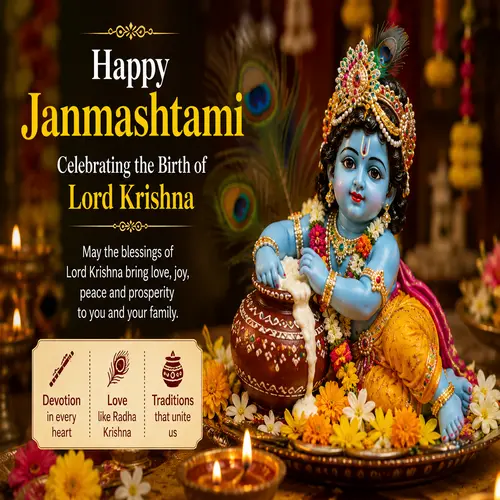
Devotees often treat Gopal as a beloved member of the family. They dress the deity in colourful clothes, decorate him with jewellery, offer food, and place him in a small cradle.
During Janmashtami, families may prepare special decorations for Gopal. Some devotees also arrange miniature scenes representing Krishna’s childhood in Gokul and Vrindavan.
This tradition adds a warm family dimension to the festival. Rather than seeing Krishna only as a powerful divine figure, devotees also celebrate him as a playful and loving child.
Kirtan and Devotional Music
Music forms one of the most important elements of Bengali Krishna devotion. During Janmashtami, devotees often sing Krishna naam, bhajans, and kirtans.
The sound of kartal, mridanga, conch shells, and devotional voices creates a deeply spiritual atmosphere. In temples and Vaishnava communities, devotees may continue chanting and singing late into the night.
Bengali devotional literature also contains countless poems and songs dedicated to Krishna, Radha, and their divine love.
Through these musical traditions, Janmashtami connects religious devotion with Bengal’s rich literary and artistic heritage.
Janmashtami and Radha-Krishna Devotion
The relationship between Radha and Krishna occupies a central position in Bengali Vaishnava traditions. Their divine love symbolizes the soul’s deep longing for the Supreme.
Therefore, Janmashtami celebrations often include devotional references to Radha and Krishna. Temples may decorate their idols beautifully and conduct special prayers and kirtans.
The cultural influence of Radha-Krishna devotion can also be seen in Bengali poetry, music, paintings, folk traditions, and religious literature.
This tradition gives Janmashtami a particularly emotional character in Bengal.
Traditional Bengali Food on Janmashtami
Food also plays an important role in Bengali religious celebrations. Devotees who observe a fast may eat permitted fruits, milk, curd, nuts, and other fasting foods according to their family traditions.
After the midnight puja, families prepare or distribute prasad. Fruits, sweets, makhana, milk-based preparations, and other vegetarian offerings may form part of the celebration.
Bengali sweets also naturally become part of festive occasions. Sandesh, mishri, peda, and other traditional sweets can complement devotional offerings, depending on household customs.
However, food traditions vary from family to family. Therefore, devotees generally follow the practices passed down through their elders.
Janmashtami Celebrations in Nabadwip and Mayapur
Nabadwip and Mayapur hold a particularly important place in Bengal’s Vaishnava heritage. These locations are closely associated with Sri Chaitanya Mahaprabhu and attract devotees throughout the year.
During Janmashtami, temples and devotional centres organize special programmes, including kirtans, religious discourses, prayers, abhisheks, cultural performances, and midnight celebrations.
Devotees from different parts of India and abroad visit these sacred places to participate in the festivities.
As a result, Janmashtami also contributes to Bengal’s religious tourism and helps introduce Bengali Vaishnava traditions to visitors.
Janmashtami and Bengali Children
Festivals become more meaningful when children participate in them. Bengali families often introduce children to Krishna’s stories through books, storytelling, devotional songs, and cultural programmes.
Children may dress as Krishna, Radha, or other characters from Krishna’s life. Schools and cultural organizations may also arrange competitions, plays, dance performances, and drawing activities around the festival.
These activities make religious traditions accessible to younger generations. At the same time, they preserve Bengali storytelling and artistic traditions.
The Spiritual Message of Janmashtami
Janmashtami carries a powerful spiritual message. Krishna’s life teaches devotees about duty, compassion, courage, self-discipline, and devotion.
The Bhagavad Gita, which presents Krishna’s teachings to Arjuna, emphasizes the importance of performing one’s duty without becoming attached to the results.
Consequently, Janmashtami provides an opportunity for people to look beyond celebration and reflect on their own lives. The festival encourages devotees to choose righteousness, overcome fear, and maintain faith during difficult circumstances.
Janmashtami and Bengali Heritage
Bengal’s connection with Krishna goes beyond temples and religious ceremonies. It appears in literature, music, dance, painting, folk traditions, family rituals, and everyday expressions of devotion.
From the kirtans of Vaishnava communities to the loving worship of Gopal in Bengali homes, Krishna devotion has become an important part of Bengal’s cultural identity.
Moreover, the festival brings families together. People decorate their homes, prepare offerings, sing together, visit temples, and share prasad. These activities strengthen family bonds while preserving cultural heritage.
How to Celebrate Janmashtami Traditionally
Families can celebrate Janmashtami in a simple and meaningful way. They can begin by cleaning and decorating the puja area. Next, they can place a Krishna idol or image and decorate it with flowers, clothes, and ornaments.
Devotees can observe a fast according to their health and family tradition, read Krishna’s stories, chant his name, and listen to devotional music.
At midnight, they can perform aarti, offer prasad, and celebrate the birth of Krishna. Most importantly, families can explain Krishna’s teachings to children so that the festival becomes an opportunity for learning as well as celebration.
Conclusion
Janmashtami represents much more than the birth of Lord Krishna. In Bengal, the festival brings together spirituality, Vaishnava traditions, Bengali music, literature, family customs, food, and devotional art.
The influence of Sri Chaitanya Mahaprabhu, the tradition of kirtan, the loving worship of Gopal, and the enduring popularity of Radha-Krishna devotion have given Janmashtami a unique place in Bengali culture.
As generations change, Bengali families continue to preserve these traditions through prayer, storytelling, music, and celebration. Ultimately, Janmashtami reminds us that devotion, courage, compassion, and righteousness remain timeless values.
By celebrating Krishna’s birth with faith and understanding, Bengali communities keep both the spiritual message of Janmashtami and the rich cultural heritage of Bengal alive.