

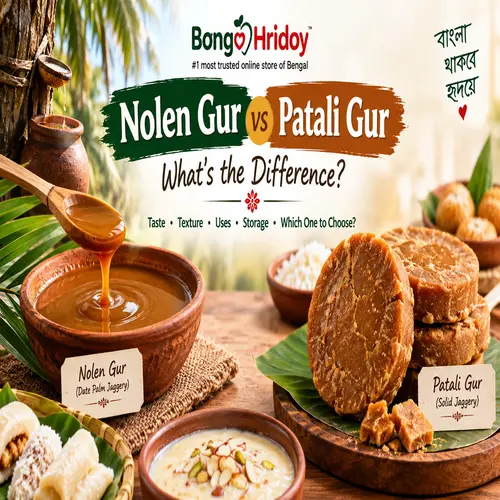
Nolen Gur vs Patali Gur: What’s the Difference?
If you have ever explored traditional Bengali food, you have probably come across two much-loved winter ingredients: Nolen Gur and Patali Gur. Both are closely associated with Bengal’s winter season and the natural sweetness of date palm sap. They are used in traditional sweets, pithas, payesh and many other Bengali delicacies.
However, Nolen Gur and Patali Gur are not exactly the same thing. Their texture, form, consistency, storage requirements and culinary uses can differ considerably.
So, what is the difference between Nolen Gur and Patali Gur? Which one should you use for pitha or payesh? And why are these traditional Bengali jaggery products so closely connected with winter?
Let’s explore the differences.
What Is Nolen Gur?
Nolen Gur is a traditional Bengali jaggery associated particularly with the winter harvest of date palm sap. It is made from the sweet sap collected from date palm trees during the cooler months.
Fresh date palm sap is collected and processed to produce jaggery with a distinctive aroma and rich sweetness. Depending on how it is processed, the resulting jaggery can have a softer or more fluid consistency.
One of the reasons Nolen Gur is so popular is its characteristic fragrance. It has a deep, caramel-like sweetness that is quite different from ordinary refined sugar.
Nolen Gur is an important ingredient in many Bengali winter delicacies, including sweets, pitha, payesh and other desserts.
What Is Patali Gur?
Patali Gur is a solid form of traditional jaggery. The prepared jaggery is allowed to thicken and set into cakes, blocks or other compact shapes.
In Bengal, Patali Gur is particularly associated with date palm jaggery and is widely used during the winter season.
Because it is solid, Patali Gur is convenient to store and use over a longer period. You can grate, chop or break it into smaller pieces before adding it to a recipe.
Patali Gur is also prized for its natural sweetness and distinctive traditional flavor.
Nolen Gur vs Patali Gur: The Main Difference
The easiest way to understand the difference is to look at their form and consistency.
| Feature | Nolen Gur | Patali Gur |
|---|---|---|
| Form | Usually soft, liquid or semi-liquid | Solid cake or block |
| Texture | Smooth, soft and syrup-like | Firm and dense |
| Main association | Fresh winter date palm jaggery | Set traditional jaggery |
| Flavor | Aromatic and intensely fragrant | Rich, deep and caramel-like |
| Uses | Desserts, payesh, sweets and pitha | Pitha, sweets, payesh and cooking |
| Storage | Requires more care depending on consistency | Generally easier to store |
| Preparation | Used directly in many recipes | Usually grated, chopped or melted |
The terminology can vary between regions and sellers, so the names are sometimes used somewhat differently. However, the most useful practical distinction is that Nolen Gur is commonly associated with the fresh, softer form of date palm jaggery, while Patali Gur generally refers to jaggery that has been concentrated and set into a solid form.
How Is Nolen Gur Made?
The traditional process begins with collecting sap from date palm trees during the winter season.
The sap is collected carefully and then processed by heating. As water evaporates, the natural sugars become more concentrated. Depending on the stage of processing, the jaggery can remain soft and syrup-like or be processed further into a thicker product.
Freshness plays an important role in the character of the jaggery. Traditionally produced winter jaggery is valued for its distinctive aroma and flavor.
This seasonal production is one reason Bengali families look forward to winter.
How Is Patali Gur Made?
Patali Gur follows a similar basic process, beginning with date palm sap.
However, the jaggery is concentrated further until it reaches a thicker consistency. It is then allowed to cool and set into solid shapes.
Once firm, the jaggery can be stored, transported and used as required.
This solid form also makes Patali Gur particularly convenient for households that want to keep traditional jaggery available for different recipes.
Does Nolen Gur Taste Different from Patali Gur?
Yes, although both can come from the same basic source.
The exact taste depends on the source of the sap, processing method, freshness and concentration.
Nolen Gur is often appreciated for its fresh, fragrant and aromatic character. Its softer consistency allows its distinctive flavor to blend easily into desserts and sweet preparations.
Patali Gur generally has a deeper and more concentrated sweetness because it has been processed into a solid form.
Neither should simply be considered “better.” They serve somewhat different culinary purposes, and personal preference also plays an important role.
Which One Is Better for Bengali Pitha?
Both can be used for traditional Bengali pitha.
For recipes where you want jaggery to dissolve easily into a filling or liquid mixture, a softer form can be convenient.
Patali Gur, meanwhile, can be grated or melted before use. It works particularly well in traditional preparations where you want a rich jaggery flavor.
Popular pitha recipes that can use traditional jaggery include:
- Patishapta
- Dudh Puli
- Puli Pitha
- Chushi Pitha
- Gokul Pitha
- Various coconut and jaggery-filled pithas
The choice often depends on the specific recipe and the consistency required.
Which Is Better for Payesh?
Traditional Bengali payesh can be prepared with different sweeteners, including sugar and jaggery.
Jaggery adds a deeper flavor and a distinctive aroma to the dessert. Nolen Gur is particularly popular for winter versions of Bengali payesh.
Patali Gur can also be used by breaking or grating it into smaller pieces and allowing it to dissolve.
When preparing milk-based desserts with jaggery, it is important to follow the recipe carefully because jaggery can sometimes affect the texture of milk if added at the wrong stage.
Can You Use Patali Gur Instead of Nolen Gur?
In many recipes, yes.
However, the final taste and texture may not be exactly the same.
If a recipe specifically calls for fresh Nolen Gur, using Patali Gur may produce a more concentrated or slightly different jaggery flavor.
You can generally grate or dissolve Patali Gur before adding it to the preparation.
Similarly, a softer Nolen Gur may not be the most convenient choice when a recipe specifically requires firm jaggery pieces.
Why Is Nolen Gur Associated With Winter?
Nolen Gur has a special relationship with Bengal’s winter food culture.
The collection and processing of date palm sap are traditionally associated with the cooler months. As winter arrives, Bengali markets begin filling with seasonal jaggery and sweets made from it.
This seasonal connection has made Nolen Gur more than just a sweetener. It has become part of the cultural identity of Bengali winter cuisine.
Winter favorites such as Nolen Gurer Sandesh, Nolen Gurer Payesh, Joynagarer Moa and different varieties of pitha showcase the ingredient beautifully.
Why Is Patali Gur Popular in Bengali Cooking?
Patali Gur offers the convenience of a concentrated, solid jaggery product while retaining the traditional flavor associated with date palm jaggery.
It can be stored and used gradually. You can break off a portion, grate it or melt it depending on the recipe.
For Bengali households, it can be a useful pantry ingredient for preparing traditional sweets and desserts throughout the season.
Nolen Gur and Patali Gur in Bengali Culture
Food in Bengal is closely connected with seasons, festivals and family traditions.
Winter brings not only cooler weather but also a special culinary calendar. Fresh vegetables, date palm jaggery, pitha and seasonal sweets become part of everyday food and celebrations.
For many Bengalis, the aroma of Nolen Gur immediately brings memories of winter mornings, village markets, homemade pitha and family gatherings.
Patali Gur carries a similar connection to traditional Bengali kitchens, particularly in recipes that require solid jaggery.
These ingredients demonstrate how Bengali cuisine makes use of seasonal produce while preserving traditional methods and flavors.
How Should You Store Patali Gur?
Because jaggery can absorb moisture, proper storage is important.
Keep Patali Gur in a clean, dry and airtight container. Store it away from excess moisture and direct heat.
If the product develops changes in texture because of humidity, that does not necessarily mean the product has gone bad. However, always check its appearance, smell and condition before use and follow the storage instructions provided with the product.
How Should You Store Nolen Gur?
Storage depends on the consistency and packaging of the product.
Soft or liquid jaggery generally requires more careful storage than solid Patali Gur. Follow the product’s specific storage instructions and keep the container properly sealed.
Because traditional jaggery products can vary in preparation and packaging, always check the manufacturer’s or seller’s recommended storage conditions.
Which One Should You Buy?
The answer depends on how you plan to use it.
Choose Nolen Gur if:
- You enjoy a softer or syrup-like jaggery.
- You want a strongly aromatic winter ingredient.
- You are preparing Bengali desserts or payesh.
- You want to experience the distinctive flavor of fresh winter jaggery.
Choose Patali Gur if:
- You prefer solid jaggery.
- You want something convenient to grate or break into recipes.
- You are preparing pitha or traditional sweets.
- You want a concentrated jaggery product that is convenient to store.
And if you love Bengali cooking, there is no reason to choose only one. Keeping both forms available gives you more flexibility in the kitchen.
Nolen Gur vs Patali Gur: Quick Summary
Nolen Gur and Patali Gur are closely related traditional Bengali jaggery products, but their consistency and typical uses make them different.
Nolen Gur is commonly associated with the fresh, aromatic, softer form of winter date palm jaggery, while Patali Gur is generally concentrated and set into a solid form.
Both bring natural sweetness and a distinctive traditional character to Bengali cuisine.
Whether you are preparing pitha, payesh, sandesh or another traditional Bengali dessert, choosing the right form of jaggery can help you achieve the texture and flavor you want.
Frequently Asked Questions
Is Nolen Gur the same as Patali Gur?
Not exactly. Both are closely associated with traditional Bengali date palm jaggery, but Nolen Gur is commonly associated with a fresh, softer form, while Patali Gur generally refers to jaggery that has been concentrated and set into a solid form.
Is Patali Gur made from date palm?
Traditional Bengali Patali Gur is commonly made from date palm sap, although jaggery products can vary by region and source.
Which is sweeter, Nolen Gur or Patali Gur?
Both are naturally sweet. The perceived sweetness depends on the concentration, preparation and product. Patali Gur may taste more concentrated because it is a solid form.
Can Patali Gur be used for pitha?
Yes. Patali Gur is widely suitable for traditional Bengali pitha and can be grated, chopped or melted depending on the recipe.
Can Nolen Gur be used for payesh?
Yes. Nolen Gur is particularly popular in winter versions of Bengali payesh because of its distinctive aroma and flavor.
Why is Nolen Gur famous in Bengal?
Nolen Gur is famous for its distinctive winter-season aroma and its important role in Bengali sweets, pitha and other traditional preparations.
Where can I buy Bengali jaggery online?
Bongo Hridoy offers traditional Bengali products and groceries online, making it easier to explore ingredients associated with Bengali cuisine.
Bring the Taste of Bengal Home
Nolen Gur and Patali Gur are more than traditional sweeteners. They represent the seasonal flavors and food traditions that make Bengali cuisine so distinctive. From winter pitha and payesh to traditional sweets, these jaggery products can bring an authentic Bengali touch to your kitchen.
Explore traditional Bengali groceries and food products at Bongo Hridoy, and discover the flavors that have been part of Bengali homes for generations.