

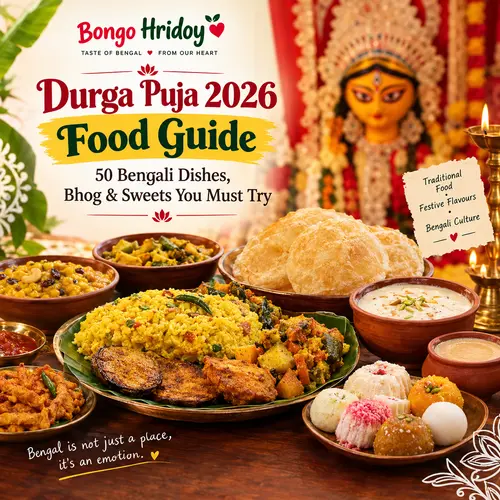
Durga Puja is more than a festival in Bengal. It is a celebration of tradition, family, culture, music, art and, of course, food. From the comforting aroma of bhoger khichuri to the sweetness of sandesh, mishti doi and payesh, food is deeply woven into the Durga Puja experience.
For Bengalis living in Kolkata, other parts of India, or abroad, Puja often brings back memories of home. A plate of khichuri and labra, a freshly fried luchi, a bowl of payesh or a piece of traditional Bengali mishti can instantly recreate the feeling of Puja.
In 2026, the main Durga Puja days in Bengal fall in October, with Maha Saptami on October 18, Maha Ashtami on October 19, Maha Navami on October 20 and Vijayadashami on October 21, according to the Bengali Durga Puja calendar.
Whether you are preparing a traditional Puja meal at home, visiting a community Puja, or simply looking for the best Bengali dishes to try this festive season, this guide brings together 50 traditional Bengali foods, bhog dishes, snacks and sweets that deserve a place on your Puja food list.
Why Food Is Such an Important Part of Durga Puja
Food and celebration have always gone hand in hand in Bengal. During Durga Puja, cooking becomes a way of bringing families and communities together.
One of the most memorable examples is bhog, the food prepared as an offering and subsequently distributed among devotees. A traditional Bengali bhog can include khichuri, labra, fritters, chutney, sweets and other vegetarian preparations. The combination of rice, dal, seasonal vegetables and simple spices gives bhog its distinctive comforting character.
However, Bengali Puja food is not limited to bhog.
Pandal hopping brings another kind of food adventure. Luchi, alur dom, rolls, chops, cutlets, fish preparations, biryani, sweets and countless street-food favourites become part of the festive experience.
And then there are the sweets.
For many Bengalis, Durga Puja simply does not feel complete without sandesh, rosogolla, mishti doi, payesh, naru and other traditional treats.
50 Traditional Bengali Foods to Try This Durga Puja
1. Bhoger Khichuri
No Bengali Durga Puja food list feels complete without bhoger khichuri. Rice and dal are cooked together with vegetables and aromatic spices to create a comforting one-pot dish.
It is traditionally served hot, often alongside labra, chutney, fritters and sweets.
2. Labra
Labra is a mixed vegetable preparation commonly associated with Bengali bhog. Pumpkin, potato, sweet potato, brinjal and other seasonal vegetables can come together in this rustic dish.
Its simplicity is exactly what makes it special.
3. Begun Bhaja
Thick slices of brinjal are seasoned and fried until soft inside and beautifully browned outside. Begun bhaja can accompany khichuri, rice or dal and is a familiar favourite at Bengali meals.
4. Cholar Dal
Cholar dal is a mildly sweet and aromatic Bengali lentil preparation. Coconut pieces, spices and sometimes raisins give it a distinctive festive character.
It pairs particularly well with luchi.
5. Luchi
Soft, fluffy and deep-fried, luchi is one of Bengal’s most loved festive breads. It is particularly popular during celebrations and family gatherings.
Serve it with alur dom, cholar dal or a rich vegetable curry.
6. Alur Dom
Bengali alur dom transforms humble potatoes into a rich and flavourful dish. Depending on the household, the preparation can range from mildly spiced to deeply aromatic.
With hot luchi, it becomes a classic combination.
7. Basanti Pulao
Yellow-hued basanti pulao is a festive rice preparation made with fragrant rice, ghee, spices and often raisins and cashews.
The gentle sweetness and aroma make it ideal for special occasions.
8. Dhokar Dalna
Dhokar dalna is made from steamed and fried lentil cakes cooked in a spiced gravy. It is one of the dishes that showcases the creativity of traditional Bengali vegetarian cooking.
9. Aloo Potoler Dalna
Potol, or pointed gourd, is a staple Bengali vegetable. Cooked with potato in a lightly spiced gravy, aloo potoler dalna makes a comforting festive meal.
10. Shukto
Shukto is a traditional Bengali mixed-vegetable dish with a characteristic mildly bitter flavour. It is often served early in a Bengali meal and represents the diversity of flavours found in Bengali cuisine.
11. Phulkopi Roast
Cauliflower gets a festive makeover in Bengali kitchens through preparations involving spices, ghee and rich gravies.
It is especially enjoyable during the cooler festive season.
12. Narkel Diye Cholar Dal
Adding coconut to cholar dal gives this classic dish another layer of texture and flavour. It works beautifully with luchi or pulao.
13. Tomato Chutney
A sweet and tangy tomato chutney is a familiar ending to many Bengali meals. It provides a refreshing contrast after savoury dishes.
14. Aamer Chutney
Raw mango chutney is another beloved Bengali accompaniment. Its sweet, sour and spicy profile makes it an excellent palate cleanser.
15. Narkel Naru
Narkel naru, or coconut laddoo, is made by cooking grated coconut with sugar or jaggery.
It is simple, traditional and strongly connected with Bengali festive cooking.
16. Payesh
Payesh is Bengal’s traditional rice pudding. Milk, rice and sugar or jaggery are slowly cooked together until creamy.
It is frequently associated with birthdays, celebrations and religious occasions.
17. Mishti Doi
Mishti doi is sweetened fermented yoghurt with a distinctive caramel-like flavour. Served chilled, it is one of Bengal’s most recognizable desserts.
18. Sandesh
Sandesh is made primarily from fresh chhana and can be prepared in numerous forms. From simple sandesh to elaborate festive varieties, it remains a Bengali sweet-shop classic.
19. Rosogolla
Soft chhana balls soaked in light sugar syrup have made rosogolla famous far beyond Bengal.
For visitors discovering Bengali sweets, this is often one of the first sweets they try.
20. Kheer Kadam
Kheer kadam combines different textures and flavours of Bengali sweets in one preparation. It is particularly appealing to anyone who enjoys creamy, milky desserts.
21. Chamcham
Chamcham is an elongated Bengali sweet made from chhana and traditionally prepared in sugar syrup. Different versions may be coated or filled with additional sweet ingredients.
22. Rajbhog
Rajbhog resembles a larger, richer cousin of rosogolla and often contains nuts or other fillings.
It is an excellent choice when you want something more indulgent.
23. Kachagolla
Kachagolla is a soft Bengali sweet made from fresh chhana. Its delicate texture and relatively simple preparation make it a favourite among traditional sweet lovers.
24. Chanar Payesh
Fresh chhana cooked in thickened milk creates a rich dessert with a creamy texture. It is especially suited to festive meals.
25. Payesh with Nolen Gur
When date palm jaggery is available, it can transform a traditional payesh into a deeply aromatic seasonal dessert.
Nolen gur is one of Bengal’s most cherished ingredients and is particularly associated with winter sweets.
26. Joynagarer Moa
Joynagarer moa is a traditional Bengali sweet made with khoi and date palm jaggery. Its connection with Bengal’s winter food culture makes it especially popular among Bengali food enthusiasts.
27. Taler Bora
Taler bora is made from ripe palmyra fruit pulp, flour and other ingredients before being shaped and fried.
It is particularly associated with late monsoon and Janmashtami traditions but remains a nostalgic Bengali favourite.
28. Patishapta
Patishapta is a Bengali crepe traditionally filled with coconut, khoya or jaggery-based mixtures.
Although strongly associated with Poush Parbon, it deserves a place on any list celebrating Bengali sweets.
29. Malpua
Malpua is a sweet fried pancake soaked or served with sweet syrup. Bengali versions can be particularly aromatic when prepared with milk, cardamom and other traditional ingredients.
30. Narkel Sandesh
Combining coconut with the soft texture of sandesh creates a distinctly Bengali festive sweet.
31. Kheer Sagar
Kheer-based Bengali sweets offer a rich combination of milk, chhana and sweetness. They are especially enjoyable for those who prefer creamy desserts.
32. Sitabhog
Sitabhog is a traditional Bengali sweet associated with Burdwan. Its appearance may resemble rice, but its sweet flavour makes it completely different from ordinary rice dishes.
33. Mihidana
Mihidana consists of tiny golden fried droplets made from gram flour. It is often enjoyed on its own or alongside other Bengali sweets.
34. Langcha
Langcha is a deep-fried Bengali sweet soaked in sugar syrup. It is especially associated with Shaktigarh and is a popular choice among lovers of syrupy sweets.
35. Sarpuria
Sarpuria is a delicate Bengali milk-based sweet known for its soft texture and rich flavour.
36. Kora Pak Sandesh
Kora pak sandesh is a firmer variety of sandesh with a deeper caramelized flavour.
It is ideal for people who prefer a more intense milk-sweet taste.
37. Chanachur
Bengali chanachur is a crunchy, spicy snack made from a mixture of fried ingredients, nuts, lentils and spices.
It is perfect for evening tea during the festive season.
38. Jhalmuri
Puffed rice, mustard oil, spices, peanuts, onions and other ingredients come together to make jhalmuri.
It is one of Kolkata’s most iconic street-food snacks and a natural companion for long evenings of Puja pandal hopping.
39. Telebhaja
Telebhaja refers to Bengali-style fried snacks. Beguni, peyaji and other fritters are particularly popular during the rainy and festive seasons.
Freshly fried telebhaja with tea is difficult to resist.
40. Beguni
Beguni is sliced brinjal coated in seasoned batter and deep-fried until crisp.
It can be served as a snack or alongside khichuri.
41. Peyaji
Peyaji is made from sliced onions mixed with batter and spices before frying. Crispy edges and soft onions make it a popular Bengali snack.
42. Mughlai Paratha
Mughlai paratha is a rich stuffed flatbread traditionally associated with Kolkata’s food culture. Egg, minced meat and other fillings may be used depending on the preparation.
43. Kolkata Chicken Roll
The Kolkata-style roll has become an iconic street food. A flaky paratha wraps around spicy filling, onion, sauces and seasoning.
44. Kolkata Mutton Biryani
Kolkata biryani is known for its fragrant rice, tender meat and distinctive potato. Although biryani is not bhog, it has become a major part of the modern Puja food experience.
45. Kosha Mangsho
Slow-cooked mutton with a dark, thick and intensely spiced gravy is one of Bengal’s most celebrated festive dishes.
It is particularly popular during family gatherings and celebratory meals.
46. Doi Maach
Doi maach combines fish with a yoghurt-based gravy and Bengali spices.
It is a classic example of the balance between richness and subtle seasoning found in Bengali cooking.
47. Chingri Malai Curry
Prawns cooked in a creamy coconut-based gravy make chingri malai curry a special-occasion favourite.
It is often served with steamed rice.
48. Ilish Bhapa
Hilsa is deeply connected with Bengali culinary culture. Bhapa ilish uses mustard and spices to create a rich, aromatic preparation.
49. Ilish Paturi
Hilsa wrapped in banana leaf with mustard and spices and then cooked gently creates the iconic ilish paturi.
50. Bengali Payesh
We have to return to payesh because some foods deserve a second mention.
A bowl of creamy Bengali payesh, particularly when prepared slowly with fragrant rice and quality milk, is one of the simplest ways to finish a festive meal.
What Is Traditionally Served as Durga Puja Bhog?
Bhog varies from Puja to Puja, household to household and community to community. However, several dishes repeatedly appear in discussions of Bengali Durga Puja bhog.
A traditional bhog platter may include:
- Khichuri
- Labra
- Begun bhaja
- Other vegetable fritters
- Cholar dal
- Aloo or potol preparations
- Tomato chutney
- Narkel naru
- Payesh
- Sandesh or other sweets
Indian Express has described khichuri, labra, fritters, chutney, chholar dal, sweets and payesh among common elements associated with Bengali Puja bhog.
The exact menu is never universal. Some family and community Pujas follow very specific traditions that have been passed down for generations.
For example, traditional Bonedi Bari Pujas can have distinctive offerings and food customs that differ from the typical community Puja menu.
Why Bengali Bhog Tastes So Different
One reason Bengali bhog feels so comforting is its simplicity.
Instead of relying on complicated techniques or excessive ingredients, many traditional preparations use rice, dal, seasonal vegetables, mustard oil, ghee, coconut and carefully selected spices.
The result is food that feels familiar and satisfying.
Khichuri is a perfect example. Rice and lentils form the foundation, while vegetables and spices create layers of flavour. Labra then adds a soft, vegetable-rich component, while chutney and sweets provide contrasting sweet and tangy notes.
This balance is one reason the traditional bhog platter remains popular across generations.
Essential Bengali Ingredients for a Puja Kitchen
If you are planning to prepare Bengali food at home this Durga Puja, a few pantry ingredients can make a major difference.
Rice and Dal
Good-quality rice and lentils are essential for khichuri, payesh and everyday Bengali meals.
Ghee
Aromatic ghee adds richness to khichuri, pulao, dal and sweets. Even a small amount can dramatically change the aroma of a festive preparation.
Jaggery
Bengali cuisine uses several forms of jaggery, including date palm jaggery. Nolen gur and patali gur are particularly valued for their distinctive flavour.
Coconut
Fresh or dried coconut appears in many Bengali dishes, from cholar dal to naru and sweets.
Mustard
Mustard is fundamental to many Bengali savoury preparations, particularly fish dishes and paturi-style cooking.
Bengali Spices
Aromatic spices help create the characteristic flavour of Bengali festive dishes without overpowering the main ingredients.
For Bengali families living outside Bengal, finding these ingredients can sometimes be difficult. This is especially true for people living overseas who want to recreate traditional Puja food away from home.
How to Create a Traditional Bengali Puja Meal at Home
You do not need to prepare all 50 dishes to experience the flavours of Bengal.
A simple menu can be incredibly satisfying.
Start with bhoger khichuri as the centrepiece. Add labra, begun bhaja and tomato chutney. For something richer, prepare cholar dal with luchi.
Finish the meal with payesh, mishti doi or traditional Bengali sweets.
For a winter-style Bengali dessert experience, date palm jaggery can be used when it is in season.
The key is not quantity. It is the balance of flavours.
Durga Puja Food for Bengalis Living Outside Bengal
For many probashi Bengalis, food is one of the easiest ways to stay connected with Bengal.
You may live in Mumbai, Delhi, Bengaluru, Hyderabad, Pune, Chennai or outside India, but the smell of ghee, roasted spices, jaggery and freshly cooked khichuri can bring back memories of home.
That is why traditional Bengali groceries and ingredients are more than ordinary pantry items. They help families recreate recipes, rituals and celebrations wherever they live.
At Bongo Hridoy, we bring together Bengali groceries, traditional foods, sweets, seasonal products and Puja essentials for Bengali families across India and for customers looking to bring a taste of Bengal into their homes.
Make Your Durga Puja Food More Special
Traditional Bengali cooking is ultimately about sharing.
It is about cooking for family, offering food during Puja, inviting friends over, sending sweets to relatives and sitting together around a table.
Whether your Puja meal is an elaborate family feast or simply a bowl of khichuri and labra, the memories created around it can last much longer than the meal itself.
So this Durga Puja, explore the flavours of Bengal.
Try a traditional bhog. Make Bengali sweets at home. Bring out the family recipes. Use familiar ingredients. And most importantly, share the food with the people who make Puja special.
Bengal is not just a place. It is an emotion — and food is one of the sweetest ways to experience it.
Frequently Asked Questions About Durga Puja Food
What food is traditionally eaten during Durga Puja?
Traditional Bengali Durga Puja food includes bhoger khichuri, labra, cholar dal, luchi, vegetable fritters, chutney, payesh, naru and various Bengali sweets. Outside bhog, families may also enjoy fish, mutton, biryani, rolls and other festive foods.
What is Bengali Durga Puja bhog?
Bengali Durga Puja bhog is food prepared as an offering during Puja and subsequently distributed among devotees. Khichuri and labra are among the best-known components, often accompanied by fritters, chutney and sweets. The exact menu varies by Puja and tradition.
What is the most famous Bengali Puja food?
There is no single dish that represents every Bengali Puja. However, bhoger khichuri, labra, luchi, cholar dal, sandesh, rosogolla and mishti doi are among the foods strongly associated with Bengali festive eating.
What sweets are popular during Durga Puja?
Popular Bengali sweets include sandesh, rosogolla, mishti doi, payesh, kheer kadam, chamcham, rajbhog, kachagolla, narkel naru and various chhana-based sweets.
Is khichuri eaten during Durga Puja?
Yes. Khichuri is one of the most recognizable foods associated with Bengali Puja bhog. It is commonly served with labra, fritters, chutney and sweets.
What ingredients are needed for Bengali bhog?
Common ingredients include rice, moong or other lentils, seasonal vegetables, turmeric, cumin, ginger, ghee and other spices. Exact ingredients vary according to the recipe and Puja tradition.
Can I prepare Bengali Puja food outside West Bengal?
Absolutely. With the right Bengali ingredients, many traditional recipes can be prepared anywhere. Rice, dal, ghee, spices, jaggery, coconut and other pantry staples can help recreate familiar Bengali flavours.
What should I serve with bhoger khichuri?
Labra is one of the classic accompaniments. Begun bhaja, vegetable fritters, chutney, papad, naru and sweets can also complement a traditional bhog-style meal.
Final Thoughts
Durga Puja is a celebration of many things, but food remains one of the most powerful connections to Bengali culture.
From a humble bowl of khichuri to an elaborate spread of luchi, cholar dal, vegetables, fish, mutton and sweets, every dish carries a story. Some recipes are connected to religious traditions, some to family kitchens, and others to Kolkata’s streets and sweet shops.
The beauty of Bengali food is that it can be both simple and elaborate, traditional and modern, everyday and festive.
This Durga Puja 2026, discover an old favourite, try something new, and share the flavours of Bengal with your family.
শুভ শারদীয়া!
বাংলা থাকবে হৃদয়ে।