

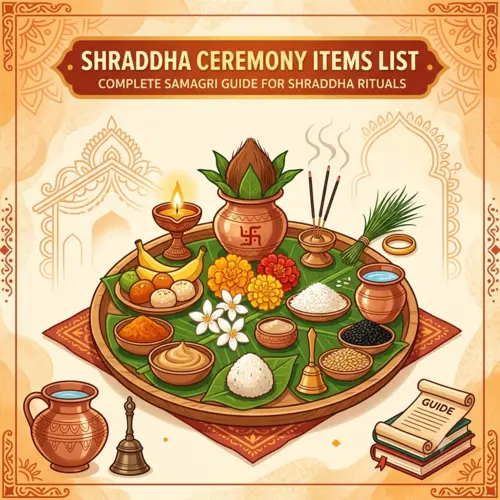
Shraddha is an important Hindu ritual performed to honour and remember departed ancestors. Families traditionally perform Shraddha ceremonies with prayers, offerings, food, and other rituals as a mark of respect and remembrance.
Because Shraddha rituals can vary significantly according to region, family tradition, religious school, and the specific ceremony being performed, the required Shraddha samagri can also differ. Bengali households, for example, may follow customs that differ from those in North or South India.
Therefore, the following list provides a practical overview of commonly used Shraddha ceremony items. For an actual ceremony, families should confirm the exact requirements with their priest or purohit.
Basic Shraddha Ceremony Items
First, arrange the basic materials needed for the ritual:
- Clean white cloth
- Kusha grass
- Til or black sesame seeds
- Uncooked rice
- Barley, where traditionally required
- Ganga jal
- Clean water
- Flowers
- Tulsi leaves
- Sandalwood paste
- Incense
- Diya
- Cotton wicks
- Ghee
- Fruits
- Coconut
- Betel leaves
- Areca nuts
- Sacred thread
- Small bowls and plates
- Puja thali
- Clean utensils
The priest may recommend additional items depending on the type of Shraddha ceremony.
Pind Daan Samagri
Pind Daan is an important part of many Shraddha traditions. Families prepare pindas as offerings during the ceremony.
Commonly required materials include:
- Cooked rice
- Black sesame seeds
- Barley flour or rice flour, according to tradition
- Ghee
- Honey
- Milk
- Kusha grass
- Water
- Tulsi leaves
- Flowers
The exact method of preparing the pindas differs according to regional and family customs. Therefore, follow the instructions given by the priest performing the ceremony.
Kusha Grass and Black Sesame
Kusha grass and black sesame seeds hold particular ritual importance in many Shraddha traditions.
Keep fresh and clean kusha grass ready before the ceremony. Similarly, use good-quality black sesame seeds as instructed by the priest.
Because these materials have specific ritual uses, avoid substituting them without consulting the purohit.
Water Offering Items
Water offerings form an important part of many ancestor rituals.
Arrange:
- Clean water
- Ganga jal
- Copper lota or vessel
- Kusha grass
- Black sesame seeds
- Flowers
- Tulsi leaves
A copper vessel is traditionally used in many households, although the exact utensils can vary.
Food for Shraddha
Food preparation is another important part of the ceremony. Traditionally, families prepare simple satvik food and offer it as part of the ritual.
Depending on regional customs, ingredients may include:
- Rice
- Moong dal
- Seasonal vegetables
- Potatoes
- Pumpkin
- Ghee
- Milk
- Curd
- Fruits
- Coconut
- Jaggery
- Sugar
- Flour
- Spices permitted by the family’s tradition
The exact menu should follow the instructions of the priest and the customs of the family.
Items for Brahmin Bhoj
In many traditions, food is prepared and served to Brahmins or other designated participants after the ritual.
For this purpose, families may arrange:
- Rice
- Dal
- Vegetables
- Ghee
- Salt
- Sweets
- Fruits
- Curd
- Water
- Serving plates
- Drinking glasses
Some families also provide dakshina, clothing, food grains, or other traditional offerings according to their customs.
Puja and Offering Materials
The following items are commonly kept ready for the ritual:
- Sandalwood
- Flowers
- Tulsi leaves
- Incense sticks
- Diya
- Cotton wicks
- Ghee
- Camphor
- Rice
- Black sesame
- Kusha grass
- Fruits
- Coconut
- Betel leaves
- Areca nuts
- Sacred thread
However, not every item applies to every Shraddha ceremony. The priest should provide the final ritual-specific list.
Clothes and Traditional Offerings
Shraddha ceremonies traditionally maintain a simple and respectful atmosphere. Families may need clean white clothing for the person performing the ritual.
Depending on the custom, additional offerings can include:
- White cloth
- Dhoti
- Saree
- Towel
- Umbrella
- Footwear
- Food grains
- Fruits
- Utensils
- Dakshina
These offerings are often associated with regional traditions and specific forms of Shraddha. Therefore, confirm them with your family priest before purchasing them.
Bengali Shraddha Ceremony Items
Bengali Shraddha rituals can include several traditional elements that differ from practices in other parts of India. The exact requirements depend on the family tradition and the instructions of the purohit.
A Bengali family may need items such as:
- Atap rice
- Black sesame
- Kusha
- Ganga jal
- Tulsi leaves
- Bananas
- Coconut
- Seasonal fruits
- Vegetables
- Milk
- Curd
- Ghee
- Sandalwood
- Flowers
- White cloth
- Betel leaves
- Areca nuts
- Traditional utensils
Some ceremonies may require additional materials for specific rituals, so obtain the list directly from the priest.
Complete Shraddha Shopping Checklist
To simplify your preparation, divide the items into categories.
Ritual essentials:
Kusha grass, black sesame, rice, Ganga jal, clean water, flowers, Tulsi leaves and sandalwood.
Pind Daan:
Cooked rice, sesame, ghee, milk, honey, Kusha and other ingredients prescribed by the priest.
Puja items:
Diya, cotton wicks, ghee, incense, camphor, puja thali, bowls and vessels.
Food:
Rice, dal, vegetables, fruits, milk, curd, ghee, sweets and other permitted ingredients.
Traditional offerings:
White clothes, dhoti, saree, towel, food grains and dakshina, where required.
Utensils:
Copper vessel, lota, plates, bowls, spoons and glasses.
How to Prepare for a Shraddha Ceremony
First, contact the priest well in advance and ask for the exact samagri list. This is particularly important because Shraddha customs can vary substantially between families and regions.
Next, purchase non-perishable items such as sesame, rice, Kusha, incense, cotton wicks, and utensils beforehand. Then arrange fresh fruits, vegetables, milk, flowers, and other perishable ingredients closer to the ceremony.
Keep all the ritual materials clean and separate from everyday household items. Finally, prepare the food according to the priest’s instructions and ensure that the ceremony space remains peaceful and organised.
Important Note About Shraddha Rituals
Shraddha is a sensitive religious ceremony, and different Hindu traditions prescribe different procedures. Some families perform annual Shraddha, while others observe specific rites according to the date, lunar calendar, or circumstances of the deceased.
Therefore, a general internet checklist should not replace guidance from a qualified family priest or purohit. Always follow the ritual tradition your family observes.
Conclusion
A carefully prepared Shraddha ceremony items list helps families organise the ritual respectfully and without unnecessary last-minute arrangements. From Kusha grass and black sesame to rice, flowers, water, food ingredients, clothes, and traditional offerings, each material has a specific place according to the ceremony being performed.
Most importantly, Shraddha is a ceremony of remembrance, respect, and gratitude toward ancestors. By preparing thoughtfully and following the guidance of your family priest, you can observe the ritual with dignity while preserving the traditions passed down through generations.