

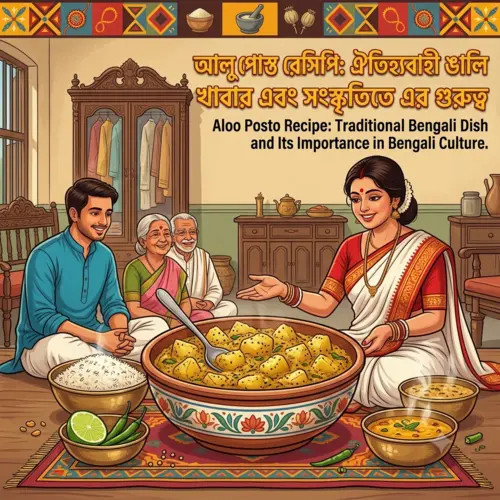
Aloo Posto is one of the most beloved dishes in Bengali cuisine. Made with potatoes, poppy seeds, green chillies, and mustard oil, this simple preparation delivers a distinctive flavour that feels both comforting and deeply familiar. In fact, for many Bengalis, Aloo Posto represents the beauty of traditional home cooking, where a few humble ingredients can create an unforgettable meal.
Moreover, Aloo Posto has remained popular across generations. Bengali families commonly serve it with steamed rice, especially during a traditional Bengali lunch. Its mild, nutty flavour and soft texture make it a perfect example of Bengal’s preference for simple yet flavourful food.
What Makes Aloo Posto Special?
The Bengali word “posto” refers to poppy seeds, which play the starring role in this recipe. Cooks traditionally grind the seeds into a smooth or slightly coarse paste and combine them with potatoes.
Unlike many rich Indian potato preparations, Aloo Posto does not require a long list of spices. Instead, it allows the natural flavour of posto, potatoes, and mustard oil to shine.
Furthermore, the recipe demonstrates an important characteristic of Bengali cuisine: balance. Bengali cooks often combine mild flavours with aromatic ingredients rather than relying on heavy spices. As a result, Aloo Posto tastes delicate, earthy, and satisfying.
Ingredients for Traditional Aloo Posto
To prepare authentic Bengali Aloo Posto, you need a few basic ingredients:
- 4 medium potatoes
- 4–5 tablespoons poppy seeds (posto)
- 2–3 green chillies
- 2 tablespoons mustard oil
- ½ teaspoon nigella seeds (kalonji)
- Salt to taste
- A small amount of turmeric, if preferred
- Water as required
You can adjust the amount of green chilli according to your taste. However, traditional Bengali cooking usually keeps the seasoning relatively simple.
How to Make Aloo Posto
Step 1: Prepare the Posto Paste
First, soak the poppy seeds in water for around 20–30 minutes. This softens the seeds and makes them easier to grind.
Next, drain the water and grind the posto with a little water until you get a smooth paste. Traditionally, Bengali cooks use a shil nora, a traditional grinding stone, to prepare the paste. Although modern kitchens often use a mixer grinder, the traditional method remains an important part of Bengali culinary heritage.
Step 2: Prepare the Potatoes
Peel the potatoes and cut them into medium-sized cubes. Then wash them thoroughly and keep them aside.
Meanwhile, heat mustard oil in a pan. Once the oil becomes hot, reduce the heat slightly and add nigella seeds. Allow them to crackle and release their aroma.
Step 3: Cook the Potatoes
Now add the potato cubes and mix them well with the tempered oil. Add salt and, if desired, a small amount of turmeric.
Cook the potatoes over medium heat for several minutes. Stir occasionally so that they cook evenly without sticking to the pan.
Step 4: Add the Posto
Once the potatoes become partially cooked, add the prepared posto paste. Mix everything thoroughly so that the paste coats the potatoes.
Then add a little water, cover the pan, and cook on low to medium heat. Allow the potatoes to become tender while the posto paste thickens.
Finally, add slit green chillies and drizzle a little mustard oil over the dish. Cook for another minute or two and switch off the flame.
Your traditional Bengali Aloo Posto is now ready to serve.
How to Serve Aloo Posto
Traditionally, Bengalis serve Aloo Posto with hot steamed rice. The combination creates a simple yet incredibly satisfying meal.
Many families enjoy it as one of the first dishes during a Bengali lunch. You can take a small portion of Aloo Posto with rice and mix it gently before moving on to other dishes.
Moreover, Aloo Posto pairs well with other Bengali preparations such as dal, fried vegetables, seasonal vegetables, fish curry, or chutney. However, many people prefer eating it simply with rice because this allows the distinctive posto flavour to stand out.
Aloo Posto and Bengali Culture
Aloo Posto represents much more than a recipe. It carries memories of Bengali homes, family lunches, traditional kitchens, and generations of culinary knowledge.
Bengali cuisine often celebrates simplicity, and Aloo Posto perfectly reflects this philosophy. The dish uses inexpensive and easily available ingredients, yet careful preparation creates a distinctive taste.
Furthermore, food plays an important role in Bengali family life. Meals often bring several generations together around the same table. Therefore, traditional dishes like Aloo Posto help preserve family memories and cultural traditions.
The dish also reflects Bengal’s connection with mustard oil and posto. These ingredients frequently appear in Bengali cooking and contribute to the distinctive character of the region’s cuisine.
Why Aloo Posto Remains Popular
Despite changing food trends, Aloo Posto continues to hold its place in Bengali households. One reason is its simplicity. You can prepare it without complicated techniques or numerous spices.
Another reason is its nostalgic appeal. For many Bengalis, the taste can evoke memories of childhood lunches, home kitchens, grandparents, and family gatherings.
Additionally, the recipe adapts easily to modern kitchens. Although cooks can use electric grinders instead of traditional grinding stones, the essential ingredients and cooking method remain largely unchanged.
Conclusion
Aloo Posto beautifully demonstrates how Bengali cuisine turns simple ingredients into deeply satisfying food. The combination of potatoes, poppy seeds, mustard oil, and green chillies creates a dish that feels humble yet remarkably flavourful.
More importantly, Aloo Posto connects food with Bengali identity and family traditions. From traditional kitchens to modern homes, generations continue to prepare and enjoy this classic dish.
So, the next time you want to experience authentic Bengali home cooking, prepare a bowl of hot Aloo Posto and serve it with steamed rice. Simple, comforting, and full of tradition, it truly captures the heart of Bengali cuisine.