

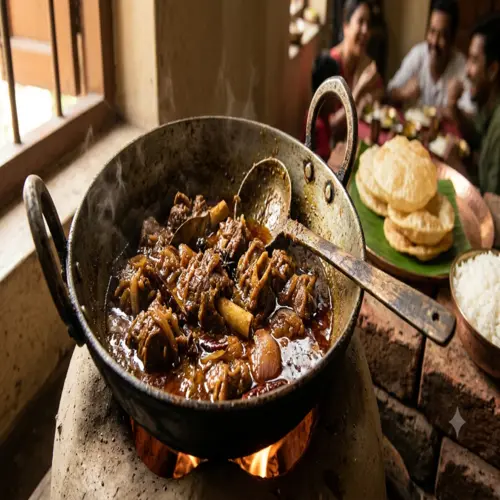
Kosha Mangsho is one of the most iconic and beloved dishes in Bengali cuisine. Rich, spicy, slow-cooked, and full of deep flavours, this traditional Bengali mutton curry holds a special place in family kitchens and festive dining tables. For many Bengalis, Kosha Mangsho is more than just a meal. It brings back memories of Sunday lunches, family gatherings, celebrations, and the irresistible aroma of spices slowly cooking in mustard oil.
The word “kosha” refers to the traditional slow-cooking process in which meat is cooked patiently with onions, ginger, garlic, and aromatic spices until the flavours become rich and concentrated. Unlike a thin curry, Kosha Mangsho has a thick, dark, flavourful gravy that coats the pieces of mutton beautifully.
Although every Bengali household may follow a slightly different recipe, the heart of Kosha Mangsho remains the same: good-quality mutton, freshly prepared spices, patience, and plenty of slow cooking.
What Makes Bengali Kosha Mangsho Special?
Bengali Kosha Mangsho stands out because of its unique cooking technique. Instead of simply boiling the mutton in water, cooks slowly koshano, or bhuno the meat with spices over a low flame.
This process allows the onions and spices to caramelise gradually. As a result, the mutton develops a deep colour and an intense flavour.
Moreover, mustard oil gives the dish its unmistakable Bengali character. Whole spices such as bay leaves, cinnamon, cardamom, and cloves add warmth and aroma, while onions, ginger, and garlic create a rich base.
The key, however, is patience. The longer you cook the masala properly, the better the final Kosha Mangsho tastes.
Ingredients for Authentic Bengali Kosha Mangsho
To prepare traditional Kosha Mangsho, you will need:
- 1 kg goat mutton, preferably with some bone
- 4–5 large onions, finely sliced or chopped
- 2 tablespoons ginger paste
- 2 tablespoons garlic paste
- 1 cup thick curd
- 4–5 tablespoons mustard oil
- 2 bay leaves
- 1 small cinnamon stick
- 4 green cardamoms
- 4–5 cloves
- 1 teaspoon cumin powder
- 2 teaspoons coriander powder
- 1–2 teaspoons Kashmiri chilli powder
- 1 teaspoon turmeric powder
- 1 teaspoon Bengali garam masala
- 1 teaspoon sugar
- Salt to taste
- 2–3 green chillies
- Warm water as required
You can adjust the amount of chilli according to your preferred spice level. However, traditional Kosha Mangsho should have a rich, aromatic heat rather than an overpowering chilli flavour.
Step 1: Marinate the Mutton
First, wash and clean the mutton thoroughly. Then place it in a large bowl and add curd, ginger paste, garlic paste, turmeric, chilli powder, and salt.
Mix everything well so that the spices coat each piece of meat. Cover the bowl and allow the mutton to marinate for at least one to two hours.
For even better flavour, you can marinate it for longer in the refrigerator. The marination helps the meat absorb the spices and also adds richness to the final dish.
Step 2: Prepare the Aromatic Base
Next, heat mustard oil in a heavy-bottomed pan or pressure cooker. Once the oil becomes hot, add a small amount of sugar. Allow it to caramelise lightly, which will help give the dish its traditional deep colour.
Then add bay leaves, cinnamon, cardamom, and cloves. Let the whole spices release their aroma.
After that, add the chopped onions and cook them slowly. Stir regularly and allow them to turn deep golden brown. This stage is extremely important because properly cooked onions create the rich foundation of authentic Kosha Mangsho.
Step 3: Add the Mutton and Spices
Now add the marinated mutton to the pan. Mix it thoroughly with the onions and whole spices.
Then add cumin powder, coriander powder, and additional chilli powder if required. Keep stirring and cook the mutton over medium heat.
This is where the real koshano begins. Instead of rushing the process, continue stirring and cooking the meat with the masala. If the mixture starts sticking to the pan, add small splashes of warm water.
Gradually, the spices will become darker and the oil will begin to separate from the masala. Consequently, the mutton will absorb the flavours and develop the rich taste that makes Kosha Mangsho so special.
Step 4: Slow-Cook the Mutton
Once the mutton has cooked well with the masala, add warm water according to the amount of gravy you prefer.
Traditional Kosha Mangsho usually has a thick gravy, so avoid adding too much water.
Cover the pan and cook the mutton on low heat until it becomes tender. Depending on the quality and cut of the meat, this may take a considerable amount of time.
You can also use a pressure cooker to reduce the cooking time. However, after pressure cooking, continue cooking the mutton without the lid for several minutes. This additional slow cooking allows the gravy to thicken and intensifies the flavour.
Finally, add slit green chillies and freshly ground Bengali garam masala. Cover the dish for a few minutes before serving.
How to Serve Kosha Mangsho
Bengalis enjoy Kosha Mangsho with several traditional accompaniments. One of the most popular combinations is Luchi and Kosha Mangsho. The soft, puffed luchis pair perfectly with the rich and spicy mutton gravy.
Additionally, you can serve Kosha Mangsho with steamed rice, pulao, or fragrant basanti pulao. Each combination creates a different but equally delicious Bengali dining experience.
For many families, Kosha Mangsho is the star of a special Sunday lunch or festive meal.
Kosha Mangsho and Bengali Culture
Kosha Mangsho holds a strong emotional connection with Bengali food culture. It represents celebration, hospitality, and family togetherness.
On special occasions, Bengali families often prepare elaborate meals for relatives and guests. Kosha Mangsho frequently becomes the centrepiece of these celebrations.
Moreover, the dish reflects the Bengali love for slow-cooked food. Bengali cooking often focuses on allowing ingredients to develop their flavours gradually. Therefore, Kosha Mangsho perfectly represents the idea that good food requires time, care, and patience.
The dish also appears on menus during weddings, festivals, birthdays, and family gatherings. In many Bengali households, the preparation of Kosha Mangsho itself becomes a family event, with different members helping to prepare ingredients and eagerly waiting for the final meal.
Why Kosha Mangsho Remains a Bengali Favourite
Despite the arrival of modern fast food and international cuisines, Kosha Mangsho continues to remain close to the Bengali heart.
Its popularity comes from its rich flavour, cultural connection, and ability to bring people together. The aroma of slowly cooking mutton can instantly create excitement in a Bengali home.
Furthermore, every family adds its own personal touch to the recipe. Some prefer more onions, while others use a stronger spice blend or cook the mutton for several hours. As a result, every plate of Kosha Mangsho can carry a unique family story.
Conclusion
Authentic Bengali Kosha Mangsho is not simply a mutton curry. It is a celebration of flavour, tradition, patience, and family.
The slow cooking process, aromatic spices, mustard oil, and tender mutton come together to create one of Bengal’s most unforgettable dishes. Whether you serve it with luchi on a festive morning or enjoy it with rice during a family lunch, Kosha Mangsho always adds warmth and excitement to the table.
So, take your time, allow the spices to cook slowly, and enjoy the traditional art of koshano. With every rich and flavourful bite, you can experience the true comfort and heritage of Bengali cuisine.