

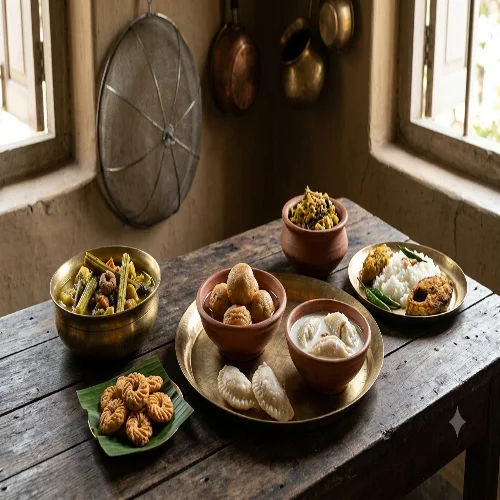
Bengali cuisine is famous for its fish curries, sweets, rice dishes, and irresistible snacks. However, beyond popular favourites such as machher jhol, rosogolla, mishti doi, and luchi, Bengal has a treasure chest of traditional foods that are slowly disappearing from everyday kitchens.
Changing lifestyles, busy schedules, modern food habits, and the growing popularity of fast food have pushed many traditional Bengali dishes into the background. Nevertheless, these forgotten foods carry the flavours, memories, and culinary traditions of generations.
It is time to rediscover them. Here are some forgotten Bengali foods that truly deserve to make a comeback.
1. Narkel Bora: A Simple Bengali Delight
Narkel Bora, or coconut fritters, once appeared regularly in Bengali homes. Cooks prepared these delicious fritters using grated coconut, flour or other binding ingredients, and simple seasonings.
Depending on the preparation, families enjoyed both sweet and savoury versions. Moreover, Narkel Bora made an excellent accompaniment to rice, dal, or afternoon tea.
Today, people often choose packaged snacks for convenience. However, homemade Narkel Bora offers a traditional flavour that modern snacks simply cannot replace.
2. Mochar Ghonto: The Forgotten Banana Flower Dish
Mochar Ghonto, made from banana flowers, is a classic example of Bengali culinary creativity. Preparing the dish requires patience because the banana flower needs careful cleaning and chopping.
Traditionally, Bengali households cooked Mocha with potatoes, coconut, spices, and sometimes lentil dumplings. The result was a rich and flavourful dish with a unique texture.
Although younger generations may not see it regularly on the dining table, Mochar Ghonto deserves renewed attention. It represents the Bengali tradition of using seasonal and locally available ingredients creatively.
3. Thor Ghonto: A Taste of Traditional Bengal
Thor, or banana stem, once played an important role in Bengali kitchens. Bengali cooks transformed this humble ingredient into Thor Ghonto, a flavourful preparation with spices and other traditional ingredients.
However, cleaning and preparing banana stem requires time and effort. Consequently, many modern households have stopped cooking it regularly.
Yet, this traditional dish demonstrates how Bengali cuisine makes creative use of every part of a plant. Bringing Thor Ghonto back to modern kitchens would also help preserve this resourceful cooking tradition.
4. Kumro Phooler Bora: The Beauty of Seasonal Cooking
Kumro Phooler Bora, or pumpkin flower fritters, is another traditional Bengali delicacy that deserves greater recognition.
Fresh pumpkin flowers are dipped in a light batter and fried until crisp. The result is simple, seasonal, and incredibly satisfying.
In the past, Bengali households often used ingredients directly from home gardens or local markets. Therefore, dishes such as Kumro Phooler Bora reflected a close connection between food and the changing seasons.
Today, this beautiful preparation can introduce younger generations to the joy of seasonal Bengali cooking.
5. Dhokar Dalna: More Than a Vegetarian Curry
Although Dhokar Dalna remains familiar to many Bengalis, it does not appear as frequently in everyday meals as it once did. This traditional dish uses lentil cakes, known as dhoka, which cooks fry and then prepare in a flavourful curry.
The dish requires several steps and therefore demands more time than many modern recipes. However, the final result makes the effort worthwhile.
Moreover, Dhokar Dalna proves that Bengali vegetarian cuisine can be rich, creative, and deeply satisfying. It certainly deserves a stronger place on modern Bengali menus.
6. Chorchori: The Art of Cooking with What You Have
Chorchori represents one of the most practical traditions of Bengali home cooking. Cooks prepare it by combining different vegetables, often with minimal spices and mustard oil.
Every household may have its own version. Some families use seasonal vegetables, while others create Chorchori using leftover ingredients.
Therefore, the dish represents an important philosophy: do not waste food. In today’s world, where reducing food waste has become increasingly important, this traditional Bengali preparation feels surprisingly relevant.
7. Shukto: A Dish Younger Generations Should Rediscover
Shukto remains a traditional Bengali dish, but many younger people have not developed a taste for its distinctive flavour. The dish generally combines different vegetables with ingredients that create a slightly bitter, creamy, and complex taste.
Traditionally, families often serve Shukto at the beginning of a Bengali meal.
Although it may not immediately appeal to everyone, Shukto represents the depth and diversity of Bengali cuisine. With modern presentation and thoughtful recipes, it could easily find new fans.
8. Panta Bhat: Bengal’s Ultimate Comfort Food
Before refrigeration and packaged breakfast foods became common, people often enjoyed Panta Bhat, or fermented leftover rice soaked in water.
Families commonly served it with salt, green chillies, onions, fried fish, or simple side dishes. It was affordable, filling, and closely connected with rural Bengali life.
Today, modern restaurants and food enthusiasts have started showing renewed interest in traditional and fermented foods. Therefore, Panta Bhat has every reason to make a stronger comeback as a symbol of Bengal’s simple and sustainable food traditions.
9. Taler Bora: A Seasonal Bengali Treasure
Taler Bora, made from ripe palmyra palm fruit, is strongly associated with the Bengali monsoon and the festive season around Janmashtami.
The preparation has a distinctive aroma and flavour that immediately reminds many Bengalis of childhood and family kitchens. However, because the fruit is seasonal and preparation takes effort, fewer households make it regularly.
Nevertheless, Taler Bora remains one of Bengal’s most unique seasonal foods. Promoting traditional recipes and seasonal ingredients can help preserve this delicious culinary heritage.
10. Chal Kumro and Traditional Vegetable Preparations
Bengali kitchens once made extensive use of vegetables such as chal kumro, jhinge, potol, kochu, and other seasonal produce.
Cooks prepared these ingredients in simple forms, including ghonto, chorchori, bhaja, and light curries. Today, however, many households rely on a smaller selection of vegetables and faster recipes.
Rediscovering these traditional preparations can bring greater variety to everyday meals. Furthermore, they can reconnect families with the seasonal rhythm of Bengali cooking.
Why These Forgotten Bengali Foods Matter
These dishes are not simply old recipes. They represent Bengal’s agricultural traditions, seasonal ingredients, creativity, and respect for food.
Traditional Bengali cooking often made intelligent use of locally available vegetables, flowers, stems, leaves, and leftovers. As a result, many of these dishes reflect a naturally sustainable approach to food.
Moreover, forgotten foods carry family memories. A plate of Mochar Ghonto or Taler Bora can remind someone of a grandmother’s kitchen, a village home, or a special festival meal.
Conclusion
Bengali cuisine has much more to offer than its most famous dishes. Forgotten foods such as Thor Ghonto, Kumro Phooler Bora, Chorchori, Panta Bhat, and Taler Bora represent a rich culinary heritage that deserves to survive.
Of course, modern life has changed the way people cook and eat. However, preserving traditional recipes does not mean rejecting convenience. Instead, we can adapt these dishes for modern kitchens while respecting their original character.
By bringing these forgotten Bengali foods back to our homes, restaurants, and food conversations, we can preserve flavours that might otherwise disappear. Most importantly, we can ensure that future generations continue to experience the incredible diversity of Bengali cuisine.