

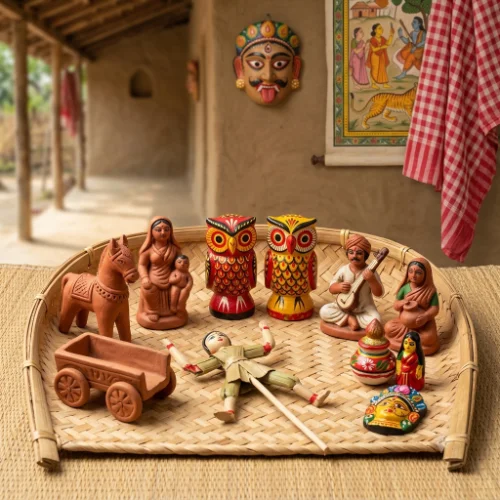
Before smartphones, video games, and battery-operated toys became part of everyday childhood, children in Bengal found joy in simple handmade toys. Crafted from clay, wood, bamboo, cloth, and other natural materials, these toys entertained children while also carrying stories of Bengal’s art, traditions, and rural life.
Traditional Bengali toys were not simply objects for play. They reflected the imagination of local artisans and introduced children to animals, mythology, village life, festivals, and everyday occupations. Moreover, each handcrafted toy carried the skills and creativity of communities that preserved these traditions for generations.
Although many of these toys are becoming less common today, they remain an important part of Bengal’s cultural heritage.
The History of Traditional Bengali Toys
Bengal has a long tradition of folk art and craftsmanship. For generations, rural artisans created toys using materials that were easily available in their surroundings.
Clay from riverbanks, bamboo from local areas, wood, cloth, and natural colours often became the basic materials for these creations. Consequently, artisans could create affordable toys for village children and sell them at local markets and village fairs.
Furthermore, traditional Bengali toys often reflected the environment and lifestyle of the region. A child might play with a clay elephant, wooden horse, bird, doll, or miniature cooking set. Through these toys, children became familiar with the animals, occupations, and traditions around them.
Clay Toys: A Living Connection with Folk Art
Clay toys hold a special place in Bengali culture. Skilled artisans shaped clay into horses, elephants, birds, dolls, and figures inspired by mythology.
Among the most recognisable examples are the famous terracotta horses associated with the folk traditions of Bengal. These colourful and expressive creations demonstrate the remarkable skill of local artisans.
Moreover, clay toys often introduced children to storytelling. Figures representing kings, queens, gods, goddesses, animals, and village characters encouraged children to create their own stories and games.
Today, traditional clay toys also attract collectors and visitors because they represent both artistic craftsmanship and cultural history.
Wooden Toys and Rural Craftsmanship
Wooden toys were another popular part of traditional Bengali childhood. Artisans carved and painted wooden animals, birds, carts, dolls, and other familiar objects.
Unlike mass-produced plastic toys, handmade wooden toys carried visible marks of craftsmanship. Each piece could look slightly different, which gave it a unique character.
Furthermore, wooden toys often supported local economies. Families of artisans passed their skills from one generation to another, creating a continuing connection between craftsmanship and community life.
By supporting traditional wooden toys today, people can help preserve these skills and encourage artisans to continue their craft.
Putul: The Traditional Bengali Doll
The Putul, or traditional Bengali doll, remains one of the most charming symbols of Bengali childhood.
Artisans created dolls from clay, wood, cloth, and other materials. Some represented brides and grooms, while others depicted village women, musicians, farmers, or characters from mythology.
Children used these dolls not only for entertainment but also for imaginative play. For example, they created miniature households, weddings, markets, and festivals using their collection of toys.
As a result, the traditional Putul helped children understand social relationships and cultural customs while encouraging creativity.
Lakshmir Bhandar and Miniature Household Toys
Traditional Bengali toy makers also created miniature household objects. These small toys included clay pots, cooking utensils, furniture, and decorative items.
Children, especially during imaginative household games, used these objects to create miniature versions of everyday Bengali life.
Moreover, these toys reflected the close relationship between play and learning. Children observed adults and recreated familiar activities through games.
In this way, traditional toys became informal educational tools that introduced young children to the customs and daily routines of their communities.
Traditional Toys and Bengali Festivals
Village fairs and religious festivals played an important role in the popularity of traditional toys. During Rath Yatra, Durga Puja, Poush Mela, Gajan, and local village fairs, artisans displayed and sold colourful handmade toys.
For many children, visiting a mela meant more than enjoying food and entertainment. It was also an opportunity to choose a new clay doll, wooden bird, or colourful handmade toy.
Therefore, these toys became closely connected with childhood memories and festive celebrations. Even today, many adults remember receiving traditional toys during visits to fairs with their parents or grandparents.
The Educational Value of Traditional Bengali Toys
Traditional toys encouraged children to use their imagination. Unlike many modern electronic toys, they did not provide fixed sounds, screens, or instructions.
Instead, children created their own stories and games. A simple clay horse could become part of a royal procession, while a wooden cart could travel across an imaginary village.
Furthermore, traditional toys introduced children to shapes, colours, animals, and everyday objects. They also encouraged social play because children often played together and created shared stories.
Therefore, these simple handmade toys supported creativity, communication, and imagination.
Why Traditional Bengali Toys Are Disappearing
Despite their cultural value, many traditional toys face serious challenges today. Cheap plastic toys and mass-produced products dominate local markets. Consequently, handmade toys often struggle to compete on price and availability.
In addition, younger generations may not always learn the traditional skills required to create these toys. If artisan communities cannot earn a sustainable income, they may move toward other professions.
As a result, some traditional toy-making techniques risk disappearing.
However, there is still hope. Cultural organisations, craft fairs, online marketplaces, museums, and consumers can all help create renewed interest in handmade Bengali toys.
Bringing Traditional Bengali Toys Back
Traditional Bengali toys can find a new place in modern homes. Parents can introduce children to handmade dolls, wooden toys, and clay figures as alternatives to mass-produced products.
Schools can also use traditional toys to teach children about art, history, and local culture. Similarly, museums and cultural events can organise exhibitions and workshops where visitors learn directly from artisans.
Moreover, online platforms can help traditional craftspeople reach customers beyond local markets. This can create new opportunities for artisans while introducing Bengali folk art to people around the world.
Conclusion
Traditional Bengali toys represent far more than childhood entertainment. They preserve stories, craftsmanship, imagination, and the cultural identity of Bengal.
From clay horses and colourful Putul to wooden animals and miniature household sets, these toys tell us how earlier generations saw and understood their world.
Therefore, preserving traditional Bengali toys is not simply about protecting objects from the past. It is about supporting artisans, encouraging creativity, and passing Bengal’s rich cultural heritage to future generations.
By choosing handmade toys, celebrating local crafts, and introducing these traditions to children, we can help ensure that the colourful world of traditional Bengali toys continues to inspire generations to come.