

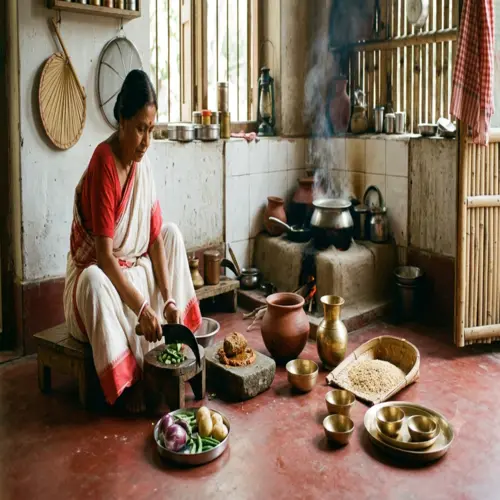
Modern homes are changing rapidly. Smart appliances, modular kitchens, and digital devices now play an important role in everyday life. However, many traditional Bengali household items continue to remain useful, practical, and culturally significant. In fact, these simple objects often carry memories of family, heritage, and generations of everyday life in Bengal.
From the kitchen to the prayer room, traditional Bengali homes have always used certain items that combine functionality with tradition. Moreover, many of these household essentials still fit perfectly into modern lifestyles. They help us preserve cultural practices while continuing to serve practical purposes.
Here are some traditional Bengali household items that you may still need today.
1. Shil Nora: The Traditional Grinding Stone
The Shil Nora is one of the most iconic items found in traditional Bengali kitchens. It consists of a flat stone and a cylindrical grinding stone. For generations, Bengali families have used it to grind spices, mustard seeds, posto, ginger, garlic, and other ingredients.
Although mixer grinders have made cooking faster, many people still believe that stone-ground spices offer a richer texture and flavour. Furthermore, the Shil Nora represents the traditional art of Bengali cooking.
Even today, you can use it for preparing fresh mustard paste, posto paste, or small quantities of spices. Therefore, it remains both a useful kitchen tool and a symbol of Bengali culinary heritage.
2. Boti: An Essential Bengali Kitchen Tool
A Boti is another traditional kitchen item that continues to hold an important place in Bengali homes. Unlike a regular knife, a Boti features a curved blade fixed to a wooden base.
Traditionally, people use it while sitting down and cutting vegetables, fish, and other ingredients. Bengali households have used different types of Boti for various kitchen tasks.
Moreover, the Boti represents a unique style of traditional food preparation. While modern knives offer convenience, many families still keep a Boti at home because of its cultural connection and practical usefulness.
3. Kansar Thala and Bati
Traditional Bengali households often use utensils made from kansa, an alloy commonly associated with Indian heritage. A Kansar Thala, Bati, or glass can add a traditional touch to everyday meals and special occasions.
These utensils also play an important role during religious ceremonies, family functions, and traditional Bengali celebrations. In addition, many families bring out their kansa utensils when serving guests or preparing festive meals.
Therefore, even in a modern home, a few traditional kansa utensils can help preserve the elegance of Bengali dining traditions.
4. Pital and Brass Puja Items
Brass, known as pital in Bengali, has remained an important part of Bengali homes for generations. Traditional households often use brass items such as kalash, ghoti, diya, bell, incense holders, and puja thalis.
These items are especially useful during Lakshmi Puja, Saraswati Puja, Durga Puja, Kali Puja, and daily household worship.
Furthermore, brass puja items add a warm and traditional appearance to the prayer space. A simple brass diya or ghoti can instantly create a feeling of devotion and cultural connection.
5. Shankha: A Symbol of Bengali Tradition
The Shankha, or conch shell, holds deep cultural and religious importance in Bengali households. Many families blow the Shankha during daily puja, evening prayers, weddings, and special religious occasions.
The sound of the Shankha often creates an atmosphere of devotion and positivity. Moreover, for many Bengalis, it brings back memories of evenings at home when the sound of the conch shell marked the beginning of prayer time.
Keeping a Shankha at home therefore connects modern families with an important Bengali spiritual tradition.
6. Gamcha: Simple, Versatile and Timeless
The traditional Bengali Gamcha remains surprisingly useful even today. Made from lightweight and absorbent cotton, it can serve many purposes around the home.
People use it as a towel, kitchen cloth, cleaning cloth, head covering, or lightweight wrap. Furthermore, its simple design and durability make it practical for daily use.
In recent years, the Gamcha has also become a symbol of Bengali identity and traditional textile craftsmanship. As a result, it has found a place not only in homes but also in modern fashion and décor.
7. Madur: The Traditional Bengali Mat
A Madur is a traditional handwoven mat that people commonly use for sitting, relaxing, or even sleeping during warmer months.
Traditional Bengali homes often placed Madur on floors, verandas, and courtyards. Even today, it offers a comfortable and simple seating option.
Moreover, a Madur can add a natural and traditional touch to modern home interiors. You can use it for meditation, casual floor seating, or as part of a Bengali-themed décor arrangement.
8. Kulo: More Than Just a Household Tool
The Kulo, traditionally made from bamboo, has been used in Bengali homes for generations. People commonly use it for cleaning and separating grains.
However, the Kulo also plays an important role in Bengali rituals and ceremonies. Families use decorated Kulo during weddings, Lakshmi Puja, Annaprashan, and other auspicious occasions.
Therefore, keeping a Kulo at home can be both practical and culturally meaningful.
9. Traditional Earthenware
Earthenware has always been closely connected with Bengali life. Items such as matir handi, clay cups, earthen lamps, and traditional pots continue to carry the charm of rural Bengal.
For example, earthen diyas create a warm atmosphere during Diwali and Kali Puja. Similarly, clay cups, popularly known as bhar, bring a traditional touch to tea and other beverages.
These items remind us of Bengal’s connection with local craftsmanship and natural materials.
10. The Traditional Ghoti
A Ghoti is a familiar sight in many Bengali households. Traditionally made from brass, copper, or steel, people use it to store and pour water.
In addition, the Ghoti plays an important role in religious rituals. Families use it during daily puja, special ceremonies, and traditional occasions.
Even today, a beautifully designed Ghoti can serve both practical and decorative purposes in a Bengali home.
Why Traditional Bengali Household Items Still Matter
Traditional household items are more than objects from the past. They represent skills, craftsmanship, family memories, and cultural identity.
Moreover, using these items allows younger generations to understand how Bengali households functioned before modern appliances became common. A Shil Nora can teach us about traditional cooking, while a Kulo can remind us of agricultural life and family rituals.
At the same time, these items can easily find a place in modern homes. You do not need to replace your appliances or completely redesign your house. Instead, you can include a few traditional elements in your kitchen, puja room, or living space.
Conclusion
Traditional Bengali household items continue to remain relevant because they combine practicality with cultural value. From the Shil Nora and Boti in the kitchen to the Shankha, Ghoti, Kulo, and brass puja items, each object tells a story about Bengali life.
Therefore, preserving these everyday essentials does more than maintain old traditions. It helps keep Bengali culture alive inside modern homes.
By using and appreciating these timeless household items, we can connect the convenience of modern life with the warmth, memories, and rich heritage of Bengal.